
Pan frying thin pork chops sounds simple, but mastering the timing, heat, and method makes a big difference. Many home cooks end up with dry or tough pork chops, simply because the pan fry time is off. If you want juicy, flavorful pork chops every time, understanding the right cook time, preparation, and mistakes to avoid will help you get there.
Let’s explore exactly how long to pan fry thin pork chops, along with the best techniques for success.
What Makes A Pork Chop “thin”?
When people say thin pork chops, they usually mean slices that are about ½ inch thick or less. Grocery stores often sell chops in this range, especially boneless ones. Sometimes bone-in chops are also cut thin. Thickness matters because it affects cooking time. Thicker chops take longer and need a different approach. For this article, we’ll focus on chops that are ¼ to ½ inch thick—the most common size for quick pan frying.
Why Pan Fry Thin Pork Chops?
Pan frying is ideal for thin pork chops because:
- It cooks quickly, keeping the meat juicy.
- The high heat gives a golden, crispy crust.
- You can control the doneness easily.
- It’s perfect for busy nights or fast meals.
Other methods (like baking or grilling) take longer and can dry out thin cuts. Pan frying is also easy to do in any kitchen, with just a skillet and stove.
How Long To Pan Fry Thin Pork Chops
The main keyword here is timing. For thin pork chops, the general rule is:
2-3 minutes per side over medium-high heat.
Let’s break this down:
- Preheat your pan. Make sure it’s hot before adding the pork.
- Place the chops in the pan and fry for about 2-3 minutes.
- Flip and cook the other side for another 2-3 minutes.
- Check the internal temperature—it should reach 145°F (63°C) for safe eating.
If your chops are thinner than ½ inch (say, ¼ inch), reduce the time to 1. 5–2 minutes per side. Thicker chops (over ½ inch) need 4–5 minutes per side, but these are not really “thin” anymore.
Here’s a quick comparison of cooking times for pork chop thickness:
| Pork Chop Thickness | Pan Fry Time (Each Side) | Internal Temp |
|---|---|---|
| ¼ inch | 1.5–2 min | 145°F |
| ½ inch | 2–3 min | 145°F |
| ¾ inch | 4–5 min | 145°F |
Essential Steps For Perfect Pan Fried Thin Pork Chops
Cooking thin pork chops is about more than just timing. Here’s a step-by-step guide:
- Pat dry: Use paper towels to remove moisture. This helps the chops brown better.
- Season well: Salt, pepper, and your favorite spices. Let them sit for a few minutes.
- Preheat the pan: Use a heavy skillet (cast iron is best) over medium-high heat.
- Add oil: Choose a high smoke point oil like canola or vegetable oil.
- Place chops in the pan: Don’t crowd them—leave space between each chop.
- Cook for 2–3 minutes: Let them cook undisturbed until the edges look golden.
- Flip and cook other side: Another 2–3 minutes. Avoid moving them too much.
- Check doneness: Use a meat thermometer if possible. Aim for 145°F.
- Rest: Let chops sit for 3–5 minutes before serving. This keeps juices inside.
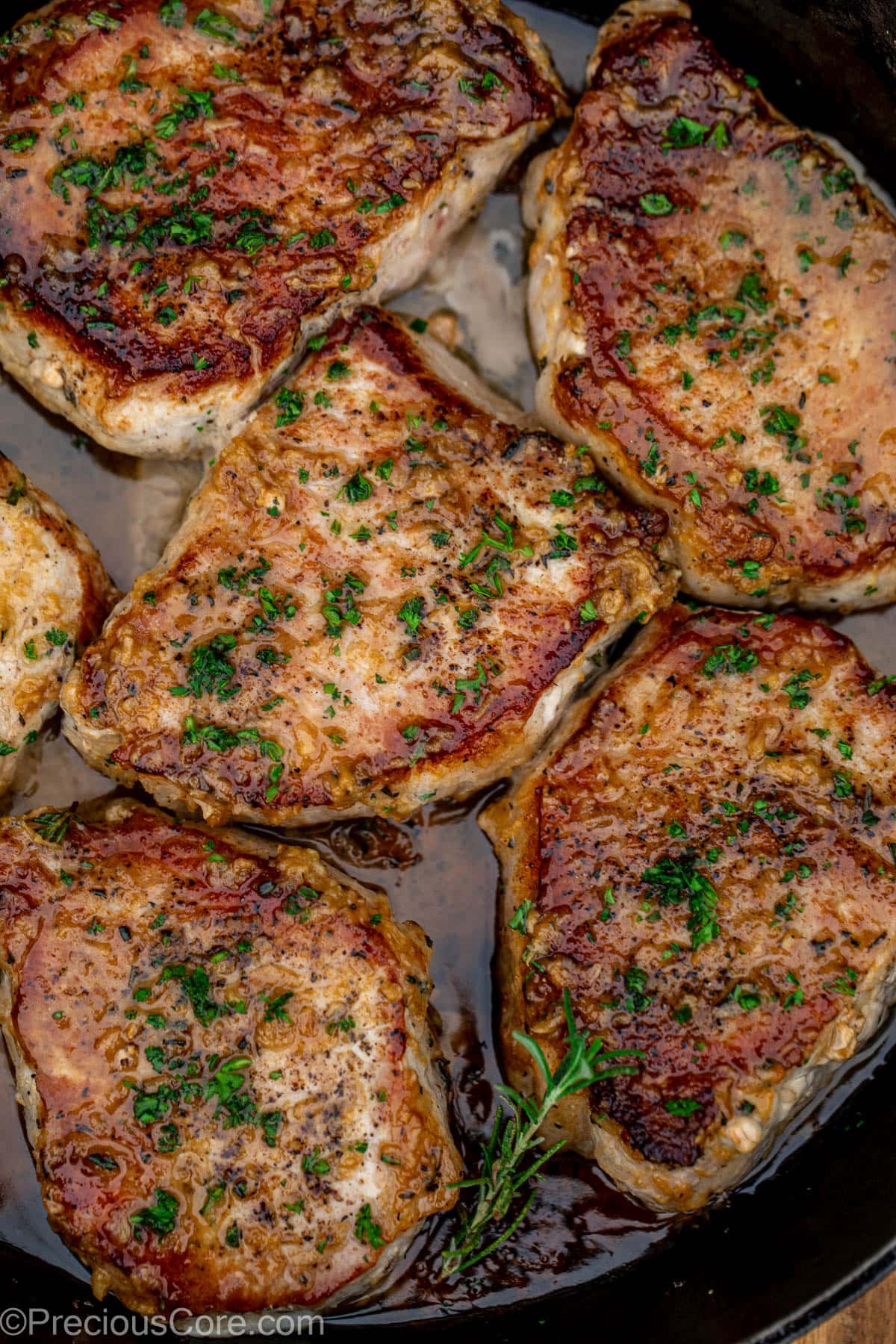
Credit: www.preciouscore.com
Mistakes To Avoid When Pan Frying Thin Pork Chops
Many cooks make errors that lead to dry or tough pork. Here are the most common mistakes:
- Overcooking: Thin chops cook fast. Leaving them in the pan too long makes them dry.
- Cooking straight from the fridge: Cold meat cooks unevenly. Let chops sit at room temperature for 10-15 minutes before cooking.
- Skipping the pat dry step: Wet chops steam instead of sear, losing flavor.
- Using too low heat: You need medium-high heat to get a good crust.
- Crowding the pan: This drops the temperature and steams the meat.
- Not resting after cooking: Resting helps keep the meat juicy.
Flavor Boosts: Marinades, Rubs, And Breading
Thin pork chops taste great with simple seasoning, but you can add flavor in other ways:
- Marinades: Soak the chops in a mix of oil, acid (like lemon or vinegar), and spices for 30 minutes. This adds flavor and tenderness.
- Dry rubs: Mix salt, pepper, paprika, garlic powder, and herbs. Coat the chops before cooking.
- Breading: Dip in flour, egg, and breadcrumbs for a crispy crust. Pan fry as usual, but add 30–60 seconds to each side.
Marinades help prevent overcooking by adding moisture. Rubs make the crust more flavorful. Breading gives a crunchy texture but requires careful timing to avoid burning.
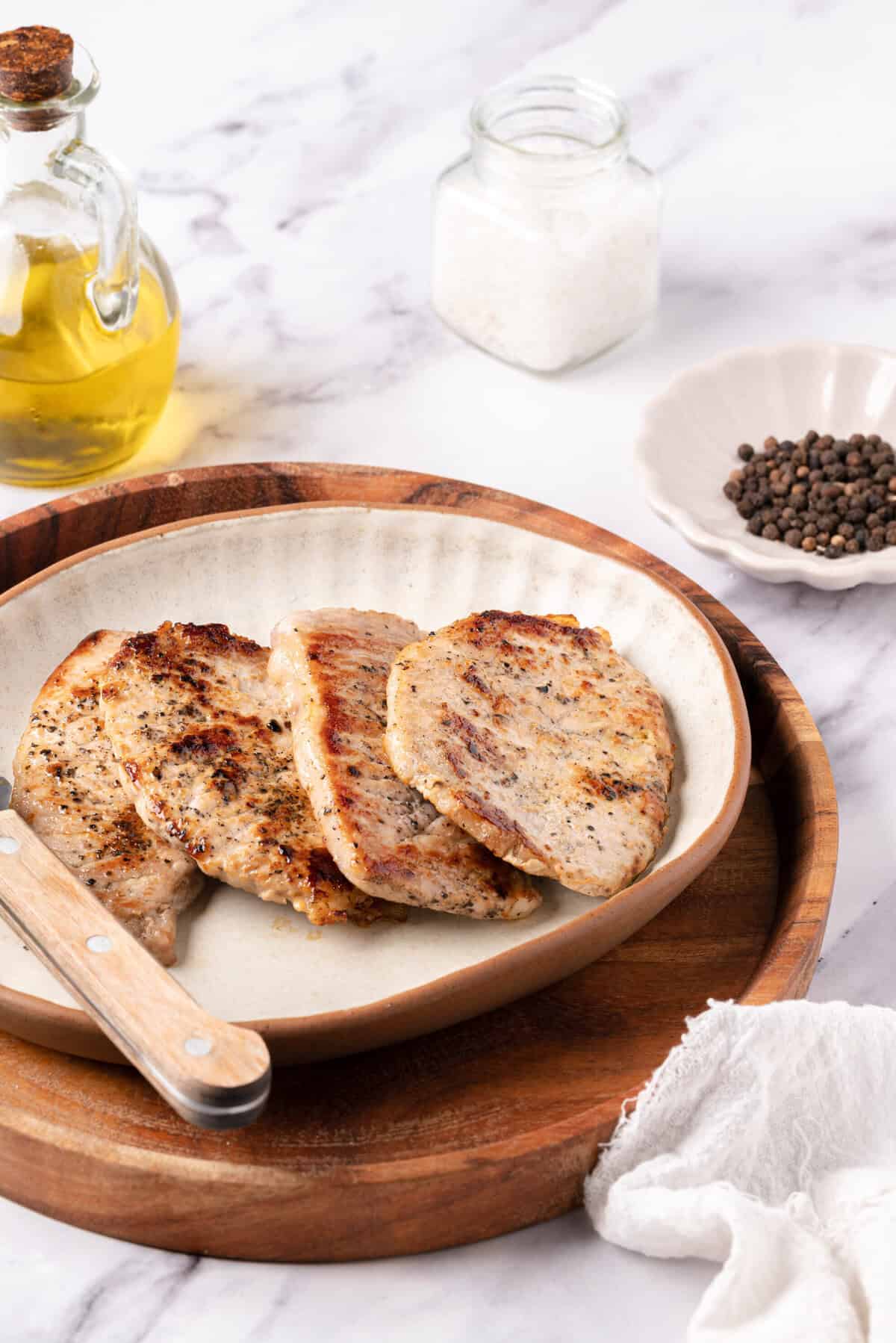
Credit: www.foodfaithfitness.com
Oil Choices And Their Impact
Choosing the right oil matters. High smoke point oils are best for pan frying, because they don’t burn easily.
| Oil Type | Smoke Point | Flavor |
|---|---|---|
| Canola Oil | 400°F | Neutral |
| Vegetable Oil | 400°F | Neutral |
| Olive Oil | 375°F | Rich |
| Butter | 350°F | Buttery |
For thin pork chops, use canola or vegetable oil for best results. If you want a richer flavor, mix a little butter with your oil—but be careful not to burn it.
Tools And Equipment That Make A Difference
Having the right tools makes pan frying easier:
- Heavy skillet: Cast iron or stainless steel works best.
- Meat thermometer: Helps check doneness without guesswork.
- Tongs: Turn chops easily without piercing them.
- Paper towels: For drying meat before cooking.
Some cooks skip the thermometer, but it’s a simple way to avoid overcooking. Even experienced chefs use one for accuracy.
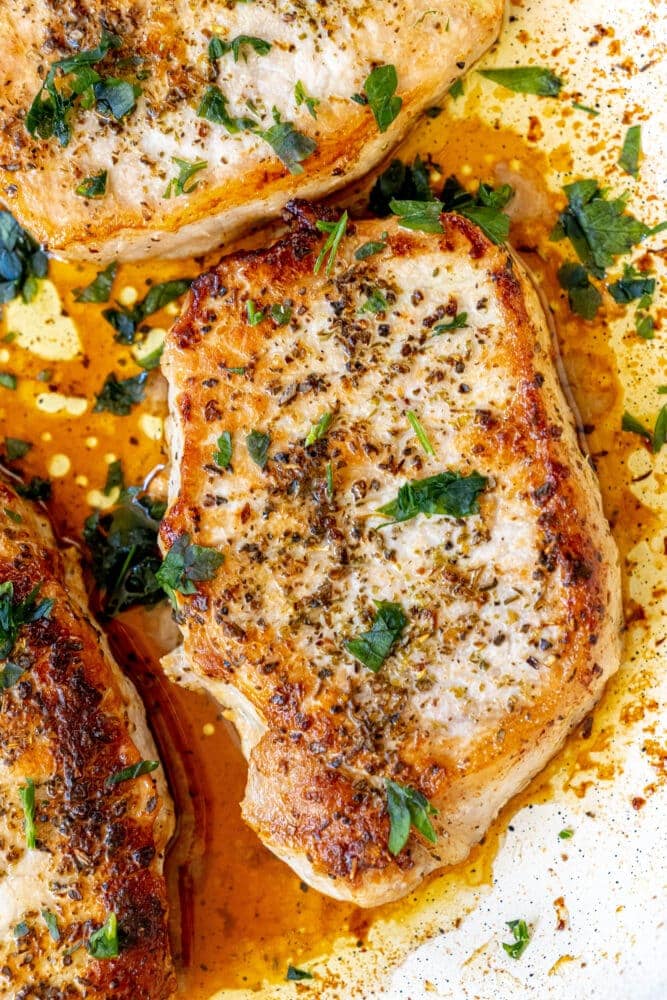
Credit: sweetcsdesigns.com
How To Tell If Your Thin Pork Chops Are Done
While timing is important, checking for doneness is even better. The safest way is using a meat thermometer. Insert it into the thickest part of the chop (avoiding bone). It should read 145°F (63°C). If you don’t have a thermometer, look for these signs:
- The chops feel firm but not hard when pressed.
- The juices run clear (not pink).
- The outside is golden brown.
Remember, thin chops can go from juicy to dry in less than a minute, so watch closely.
Serving Suggestions And Pairings
Thin pork chops are versatile. Here are some great ways to serve them:
- With mashed potatoes and green beans
- Over rice with a lemon butter sauce
- In a sandwich with lettuce and tomato
- With a simple salad for a light meal
You can also slice them for stir-fries or tacos. Pork pairs well with apples, mustard, and herbs like sage or thyme.
Health And Nutrition Facts
Pork chops are a good source of protein and B vitamins. Thin chops are lower in fat than thick, bone-in cuts, especially if you trim excess fat. One 4-ounce thin pork chop (without breading) has about:
- 180 calories
- 22 grams protein
- 8 grams fat
- 0 grams carbs
Pan frying uses less oil than deep frying, making it a healthier choice. If you use olive oil, you add healthy fats. Avoid breading if you want fewer calories.
Expert Tips For Juicy Pork Chops
Most home cooks overlook a few simple tricks:
- Let pork chops rest after cooking. This keeps juices inside.
- Use a meat thermometer every time. It’s more reliable than guessing.
- Try a quick brine: Mix water, salt, and sugar. Soak chops for 30 minutes before cooking. This adds moisture and flavor.
- Add a splash of stock or wine to the pan after frying, then simmer for a minute. This makes a quick sauce and keeps chops moist.
- Slice against the grain before serving for tenderness.
These tips separate good pork chops from great ones, especially for thin cuts.
Comparison: Pan Frying Vs Other Methods
Pan frying isn’t the only way to cook thin pork chops, but it’s often the best. Here’s a simple comparison:
| Cooking Method | Cook Time | Texture | Flavor |
|---|---|---|---|
| Pan Frying | 4–6 min | Crispy outside, juicy inside | Rich, savory |
| Baking | 10–15 min | Even, less crispy | Mild |
| Grilling | 4–7 min | Charred, sometimes dry | Smoky |
| Broiling | 5–8 min | Crispy, can dry out | Bold |
Pan frying stands out for speed and flavor—especially for thin pork chops.
Common Questions Beginners Have
Many cooks aren’t sure about timing, thickness, and safety. Here are non-obvious insights:
- Chops cook unevenly if not dried first, leading to bland spots.
- Using room temperature pork helps even cooking—cold meat can cause tough edges.
- Even a slight overcook (30 seconds) can dry out thin chops, so timing matters more than with thicker cuts.
If you’re unsure, always check with a thermometer and err on the side of caution.
Frequently Asked Questions
How Can I Keep Thin Pork Chops From Drying Out?
Dry pork chops are common, but you can avoid this by cooking over medium-high heat for only 2–3 minutes per side. Letting them rest for a few minutes after cooking helps lock in moisture. Using a quick brine or marinade also keeps chops juicy.
Should I Cover The Pan When Frying Thin Pork Chops?
No, you shouldn’t cover the pan. Covering traps steam and makes the chops soggy. For a crispy crust, cook uncovered and leave space between chops.
Can I Use Bone-in Thin Pork Chops For Pan Frying?
Yes, bone-in thin pork chops work well. They may need 30 seconds more per side, since the bone slows heat transfer. Otherwise, follow the same timing and steps as boneless chops.
What Seasonings Are Best For Thin Pork Chops?
Simple seasonings like salt, pepper, and garlic powder work well. You can add paprika, herbs (thyme, rosemary), or a dry rub. For extra flavor, try marinating with lemon juice, olive oil, and spices for 30 minutes.
Is It Safe To Eat Pork Chops That Are Slightly Pink?
Yes, it’s safe if the internal temperature is 145°F. Pork is no longer considered unsafe when slightly pink at this temperature. Always use a thermometer for accuracy (see guidance from USDA).
Mastering pan fried thin pork chops is about timing, preparation, and attention to detail. With these tips and techniques, you’ll get juicy, flavorful pork every time—whether for a quick weeknight dinner or a special meal. Remember, a few minutes makes all the difference, and the right steps help you avoid dry or bland results.
Enjoy your perfectly cooked pork chops and impress your family with your new skills!

Hello, This is Annie Walker, a 38-year-old blogger, founder, and editor of Cookware Guider from NY, USA. I am a cookware fanatic and passionate cooker. I love to cook with different types of cooking appliances (example: all types of cookware, rice cookers, slow cookers, etc) almost every day in my kitchen. I love to share my experience with my readers in my blog. Also, I enjoy helping people to solve their problems through my website. You can follow me on Twitter & Pinterest. To know details about my blog please check the about us page.