
Cooking bacon in a frying pan is simple, but there’s a big difference between good bacon and great bacon. If you want bacon that’s crispy, flavorful, and not burnt or chewy, technique matters. Many people make small mistakes without realizing it.
With the right steps, you can turn an everyday breakfast into something special—whether you’re cooking for yourself, family, or friends. Here’s a practical guide that shows you exactly how to cook bacon in a frying pan, with some useful tips that even seasoned cooks might miss.
What You Need To Cook Bacon In A Frying Pan
Before you start, gather your tools and ingredients. Having everything ready makes the process smoother and safer.
- Bacon slices: Regular or thick-cut
- Frying pan: Cast iron, stainless steel, or nonstick (at least 10-inch diameter)
- Tongs or fork: For flipping bacon
- Paper towels: For draining
- Plate: To hold cooked bacon
- Optional: Splatter screen, for less mess
Most US households use pork bacon, which is about 42 calories and 3g fat per slice. Thick-cut bacon is about 60 calories per slice and takes longer to cook. If you use turkey bacon, adjust the cooking time and expect a less crispy result.
Choosing The Right Bacon
The type of bacon affects taste and texture. Here’s a quick comparison to help you decide:
| Type | Texture | Flavor | Average Calories (per slice) |
|---|---|---|---|
| Regular Pork Bacon | Crispy or chewy | Salty, smoky | 42 |
| Thick-Cut Bacon | Meaty, chewy | Richer, smoky | 60 |
| Turkey Bacon | Less crispy | Mild, less smoky | 30 |
For frying pan cooking, regular pork bacon gives the best crisp. Thick-cut is good for sandwiches or recipes needing more chew. Turkey bacon is a healthier choice but rarely gets as crispy.
Preparing Bacon For The Frying Pan
Never put cold bacon straight into a hot pan. Let bacon sit at room temperature for about 10 minutes. This helps the fat render evenly, making the bacon cook more consistently. If you skip this, the bacon can curl, cook unevenly, or burn at the edges.
Tip: Pat bacon dry with paper towels if it feels wet. Moisture causes splattering and can make bacon steam instead of fry.
Step-by-step Guide: Cooking Bacon In A Frying Pan
Follow these steps for perfect bacon every time:
1. Arrange Bacon In The Pan
Place bacon strips in a single layer. Do not overlap. Use a cold pan—this allows the fat to render slowly and prevents sticking.
2. Turn On The Heat
Set your stove to medium-low. Avoid high heat, which burns bacon and leaves the fat undercooked.
3. Let The Bacon Cook
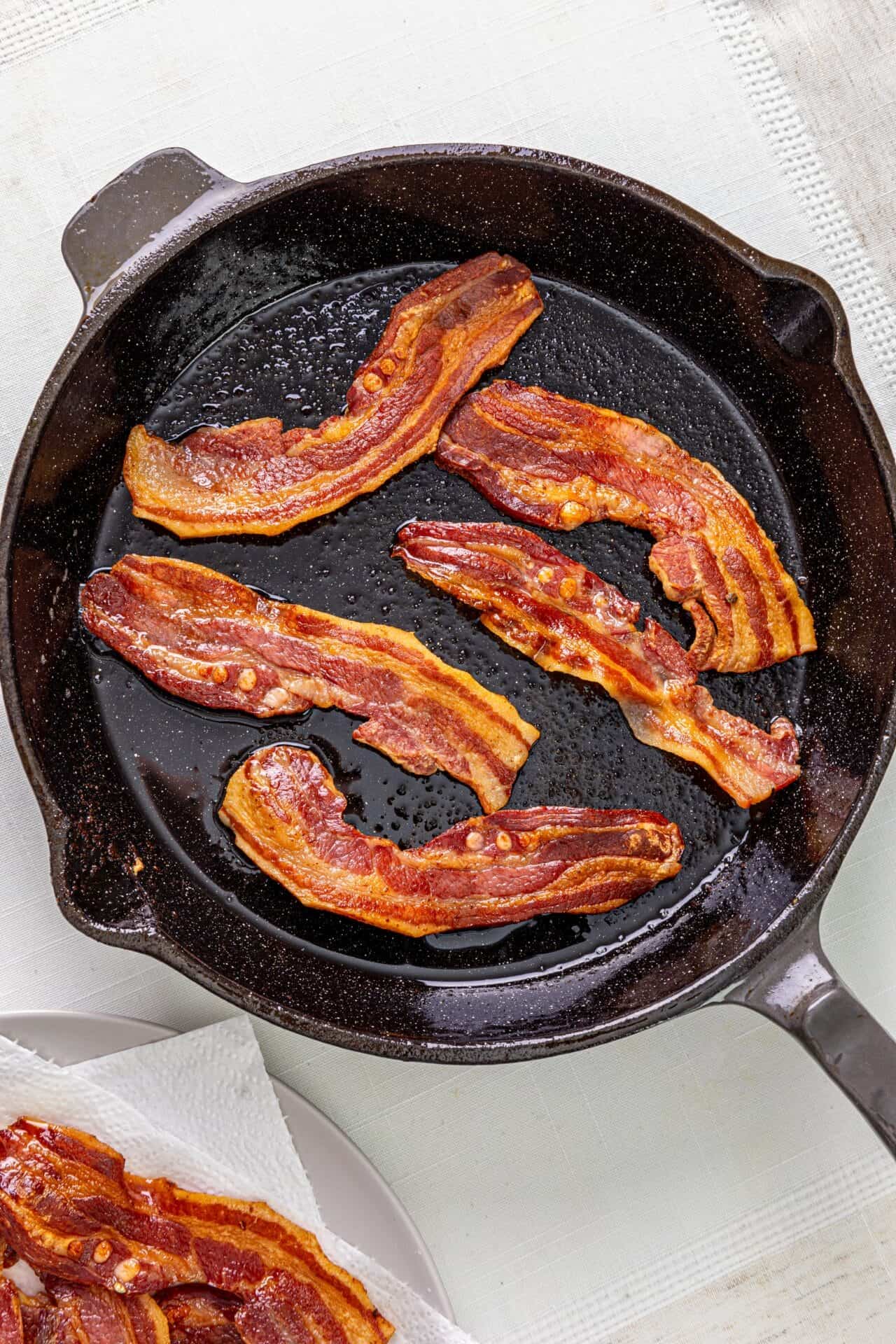
As the pan heats, the bacon fat starts to melt. You’ll hear gentle sizzling. After 2–3 minutes, the edges will curl. Use tongs to reposition slices if needed.
4. Flip Bacon
When the underside is golden brown (usually after 4–5 minutes), flip each slice. Cook the other side for another 3–4 minutes.
5. Check For Doneness
Bacon is done when both sides are golden brown and crispy. For thick-cut bacon, add 2–3 more minutes per side.
6. Drain And Cool
Use tongs to transfer bacon to a plate lined with paper towels. Let it sit for 1–2 minutes before serving.
Example: For 6 slices of regular bacon, total cooking time is about 8–10 minutes. For thick-cut bacon, 12–15 minutes.
How To Avoid Common Bacon Cooking Mistakes
Many beginners make errors that ruin bacon’s texture and flavor. Here’s how to avoid them:
1. Using High Heat
Bacon burns easily. Always start low and raise heat only if needed.
2. Overcrowding The Pan
Overlapping slices makes bacon steam, not fry. Cook in batches if needed.
3. Skipping The Drain Step
If you skip draining, bacon becomes greasy. Always use paper towels.
4. Not Saving Bacon Fat
Bacon fat is full of flavor. Pour leftover fat into a jar for later use in cooking eggs, vegetables, or even popcorn.
5. Moving Bacon Too Much
Let bacon cook undisturbed for best crisp. Only flip once.
Cooking Bacon For Different Levels Of Crispiness
Some people prefer chewy bacon, others like it crispy. Adjust your method based on your preference.
| Texture | Heat Level | Cooking Time | Tips |
|---|---|---|---|
| Chewy | Medium-low | 6–8 minutes | Flip early, remove when edges curl |
| Crispy | Medium | 8–12 minutes | Let bacon cook longer, watch closely |
| Extra crispy | Medium-high | 12–15 minutes | Do not walk away, remove before burning |
Non-obvious insight: Bacon continues to crisp as it cools. If you remove bacon when it looks slightly less crispy than you want, it will reach perfect crispiness in 1–2 minutes.
Credit: bakedbree.com
Practical Tips For Better Bacon
- Use a splatter screen: Bacon fat pops as it cooks, so a screen keeps your stove cleaner.
- Cast iron pans: These hold heat well, making bacon cook evenly. They also add flavor.
- Nonstick pans: Good for easy cleanup, but bacon won’t get as crispy as in cast iron.
- Save the bacon fat: Store in a jar in the fridge. Use for frying potatoes or adding flavor to soups.
- Cut slices in half: If your pan is small, cut bacon to fit. Halved slices cook more evenly.
Serving Ideas For Bacon
Bacon isn’t just for breakfast. Here are some creative ways to use your fried bacon:
- Classic breakfast: Eggs, toast, and bacon
- Bacon lettuce tomato (BLT) sandwich: Add crispy bacon for crunch
- Salads: Toss chopped bacon into spinach or Caesar salads
- Bacon-wrapped vegetables: Wrap asparagus or green beans in bacon, fry until crispy
- Bacon bits: Crumble cooked bacon and sprinkle on soup or baked potatoes
Stat: In the US, over 70% of households eat bacon at least once a month, according to the National Pork Board.

Credit: www.bbcgoodfood.com
Cleaning Up After Cooking Bacon
Bacon leaves behind a greasy pan and splatters. Here’s how to clean up quickly and safely:
- Let the pan cool before cleaning. Hot grease can cause burns.
- Pour leftover fat into a heat-proof container (not down the drain—it can block pipes).
- Wipe the pan with paper towels to remove excess grease.
- Wash pan with hot water and dish soap. For cast iron, use minimal soap and dry immediately.
Tip: Sprinkle a bit of salt on grease splatters. It absorbs fat and makes wiping easier.
How Frying Pan Bacon Compares To Other Methods
Many people ask if frying pan bacon is better than oven or microwave bacon. Let’s compare the methods:
| Method | Texture | Ease | Time | Best For |
|---|---|---|---|---|
| Frying Pan | Crispy, chewy | Medium | 8–15 min | Small batches |
| Oven | Evenly crispy | Easy | 12–20 min | Large batches |
| Microwave | Less crispy | Very easy | 3–6 min | Quick snacks |
Non-obvious insight: Frying pan bacon gives you more control over doneness and crispiness. Oven bacon is better for feeding a crowd, but pan-fried bacon has deeper flavor due to direct contact with the hot surface.
Bacon Safety: Handling And Storage
Raw bacon can carry bacteria like Salmonella or Listeria. Handle and store bacon safely:
- Always wash hands after touching raw bacon.
- Store unopened bacon in the fridge (below 40°F).
- After cooking, refrigerate leftovers within 2 hours.
- Use cooked bacon within 4–5 days.
If bacon smells sour or feels slimy, throw it away. Food safety matters more than saving a few slices.
Frequently Asked Questions
How Do I Keep Bacon From Curling In The Pan?
Bacon curls because the fat and meat cook at different rates. Let bacon sit at room temperature before cooking. Start with a cold pan and cook slowly. Press bacon down with a spatula if needed.
Can I Cook Bacon Without Oil?
Yes. Bacon releases its own fat as it cooks, so you don’t need extra oil or butter. Adding oil makes bacon greasy and may cause burning.
How Do I Make Bacon Crispy?
For crispy bacon, use medium heat and cook until golden brown. Drain on paper towels. Removing bacon just before it’s fully crisp lets it finish crisping as it cools.
Is Bacon Healthy?
Bacon is high in fat and sodium. One slice has about 42 calories and 3 grams of fat. Eat bacon in moderation. If you want a healthier option, try turkey bacon or trim excess fat.
What’s The Best Pan For Cooking Bacon?
A cast iron pan is best for flavor and crispiness. Nonstick pans are easier to clean but don’t get as hot. Stainless steel works, but bacon may stick if the pan isn’t seasoned.
Cooking bacon in a frying pan is a skill that’s easy to learn but hard to master. With the right technique, you can enjoy bacon just how you like it—crispy, chewy, or somewhere in between. Remember to start with a cold pan, use medium-low heat, and never rush the process. If you follow these steps, your bacon will be delicious every time. For more details on bacon types and cooking methods, visit Wikipedia. Bacon brings flavor and fun to meals, and learning to cook it well is worth the effort.
:strip_icc()/BHG-recipes-breakfast-meats-how-to-cook-bacon-part-01-B-fd41614a5ecf477cb999da9f8a117194.jpg)
Credit: www.bhg.com

Hello, This is Annie Walker, a 38-year-old blogger, founder, and editor of Cookware Guider from NY, USA. I am a cookware fanatic and passionate cooker. I love to cook with different types of cooking appliances (example: all types of cookware, rice cookers, slow cookers, etc) almost every day in my kitchen. I love to share my experience with my readers in my blog. Also, I enjoy helping people to solve their problems through my website. You can follow me on Twitter & Pinterest. To know details about my blog please check the about us page.