
To preheat Our Place Wonder Oven, turn the top dial to Bake, set the temperature dial to your target, then wait about 4 to 5 minutes for the “Ready” light to come on. Small countertop ovens heat fast, so that’s usually all the time you need.
Three things change that answer. Your target temperature matters — 450°F takes longer than 350°F. So does whether you put food in during preheat, which most recipes don’t want. And the light is a guide, not a guarantee: the walls get hot before the air does.
Who should read this Wonder Oven preheat guide
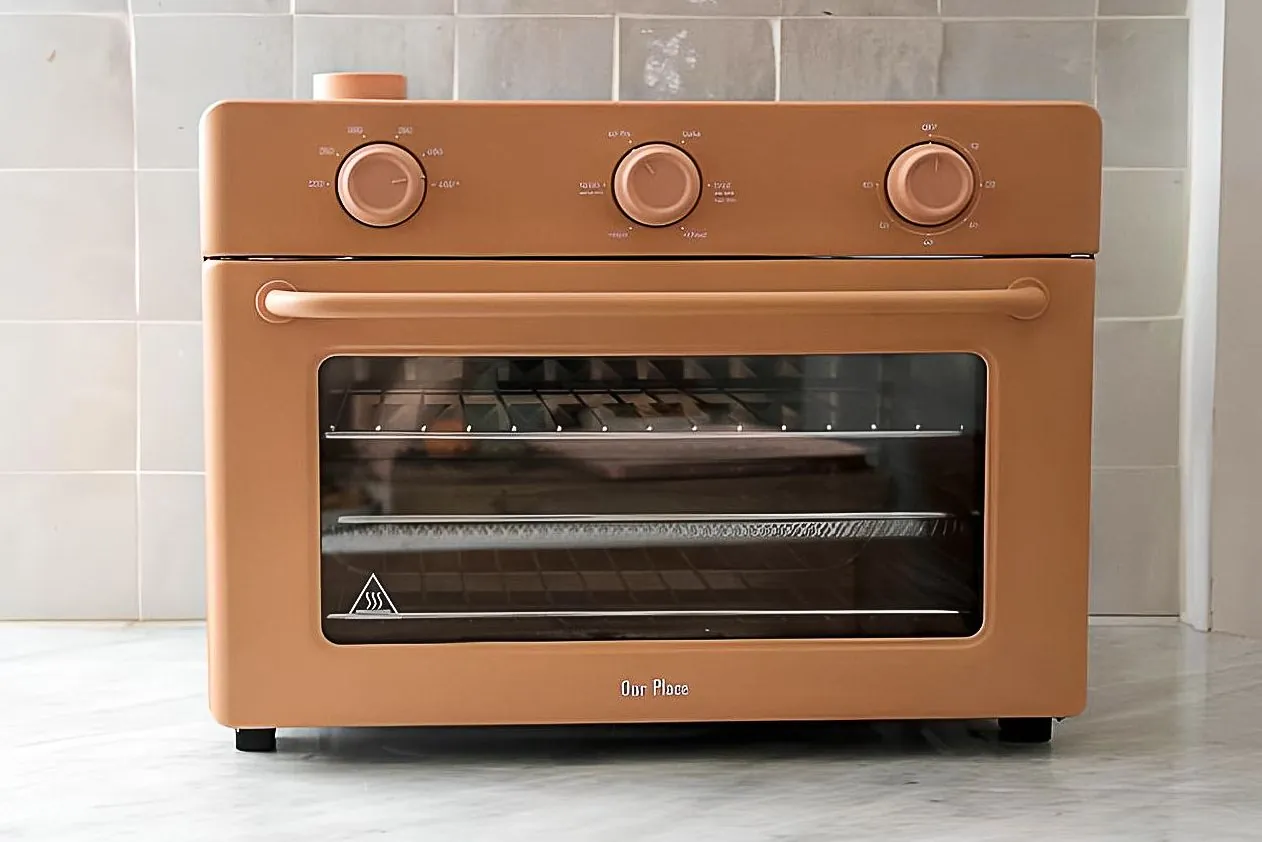
Three kinds of people search for this. The first just unboxed a Wonder Oven and wants to know if preheating works the same as a big wall oven. The second has used it for months and keeps getting uneven results — burnt tops, pale middles — and suspects the preheat step.
If you’re in the first group, this page is written for you. You’ll get the dial positions, the timing, and the signs that tell you it’s actually ready. If you’re in the second group, jump to the section on what separates a good result from a poor one — your issue is probably rack position or preheat timing, not the oven itself.
If you’re in the third group, this page helps less. You need reviews, size comparisons and return policies, not operating steps.
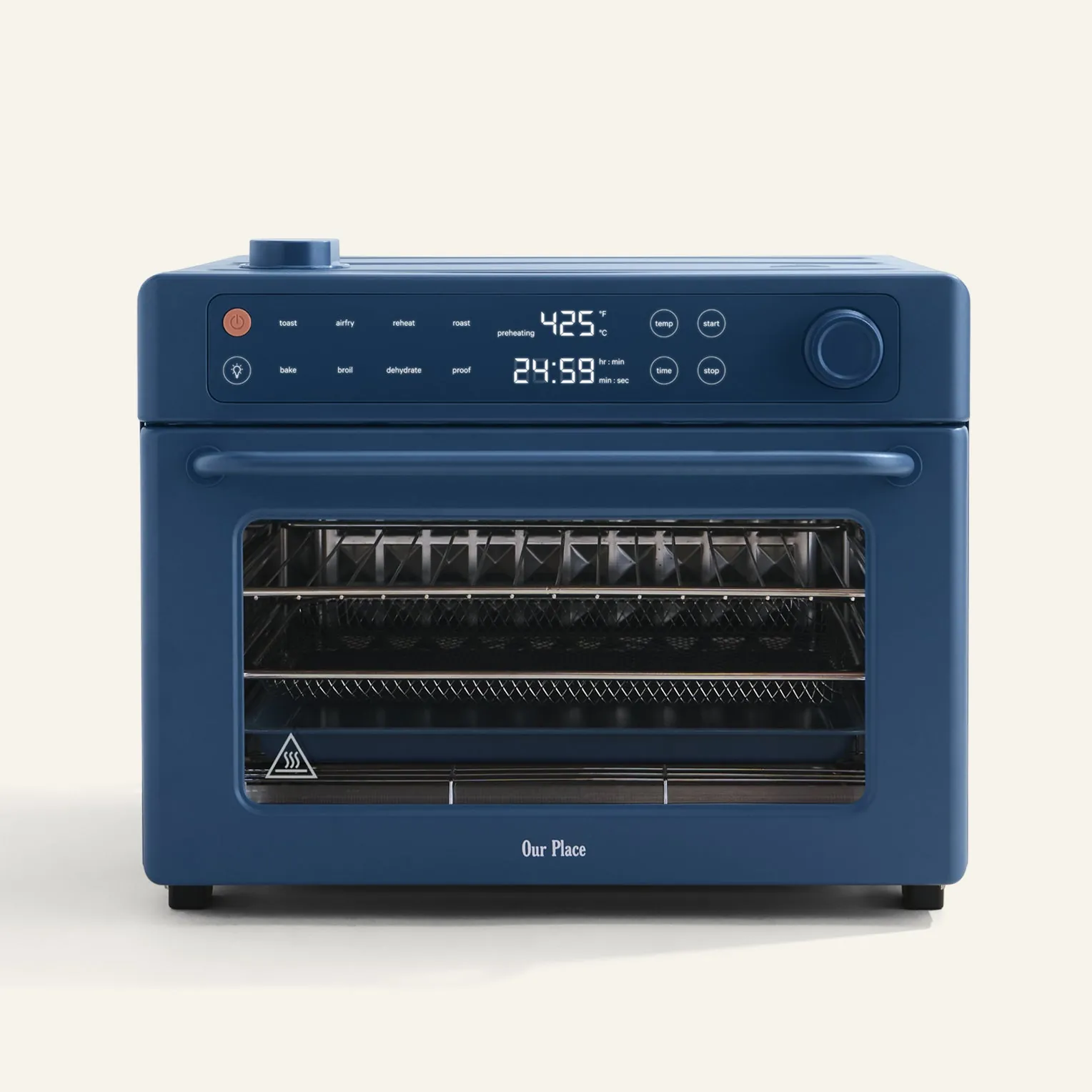
One assumption runs through everything below: you have the standard Wonder Oven with its two dials and the “Ready” indicator light. If your model has a digital display or different controls, check the manual that came in the box — the steps will be close but the buttons won’t match.
What decides how your preheat goes
Target temperature is the biggest factor. A 350°F preheat on this oven takes roughly 4 minutes; 450°F runs closer to 5 or 6. The gap isn’t huge because the cavity is small, but it’s real. Watch your own Ready light with a phone timer for two or three sessions and you’ll know your numbers.
What you put inside during preheat is the second factor, and it’s the one people get wrong most. A baking sheet or a cast-iron pan left in adds mass that has to heat too. That’s fine if the recipe wants a hot pan — it just adds a minute or two. Loose food going in cold defeats the whole point.
Rack position changes results more than preheat length does. The top position sits close to the heating element, so it browns fast. The middle position is the safe default for most baking. Your manual shows which slot is which.
Room temperature and a cold kitchen slow things down slightly, but on a countertop oven this is a minor effect. Don’t overthink it.
Finally, how full the oven is. One sheet of vegetables heats the air back up quickly after the door closes. Two stacked trays drop the temperature and stretch your cooking time.
Step-by-step preheat for the Wonder Oven
Clear the cavity. Take out any trays, crumbs or foil you don’t need. A dirty interior smokes at high heat, and that smoke flavors your food. You’ll know it’s clean when you can see the heating elements clearly.
Set the top dial to Bake. Turn it until the pointer lines up with Bake, not Broil or Toast. Bake runs both elements at a controlled temperature, which is what preheating means. The oven is now on.
Set the temperature dial to your recipe’s number. If the recipe says 400°F, set 400°F — don’t round up to speed things along. Turning it higher doesn’t preheat faster; it just overshoots and then you’re cooking too hot.
Leave the door closed and start a timer. Set 5 minutes. Opening the door to peek dumps the heat you just built, and you’ll start over. You’ll know the step worked when the Ready light comes on before your timer ends.
Wait for the Ready light. This light tells you the oven reached its set temperature. If it hasn’t come on by 6 minutes at 450°F, something’s off — check that the dial isn’t between settings.
Add 1 extra minute for a cold baking sheet or pan. Metal takes time to absorb heat. If your recipe wants a hot pan — roasted vegetables, for example — put the empty pan in during preheat and give it that extra minute.
Open the door, load fast, close it. Have your food ready on the counter before you open anything. Ten seconds with the door open is fine; a minute of hunting for the tray is not.
Reset your cooking timer from the moment the door closes. Your recipe’s time assumes a hot oven with food going in. The preheat minutes don’t count toward it.
The judgement call that separates a proper preheat from a fake one: waiting for the light instead of guessing by feel. The metal walls get hot within a minute, so touching the outside tells you nothing. The air inside is what cooks your food, and only the light confirms the air is ready.
Preheat times and settings at a glance
Times below assume the standard Wonder Oven, an empty cavity, and a room around 70°F. A cold pan inside adds roughly 1 minute; a very cold kitchen adds a little more.
| Your situation | What to do | Time it takes | What to watch for |
|---|---|---|---|
| Baking at 350°F | Bake, middle rack | About 4 minutes | Ready light steady |
| Roasting at 400°F | Bake, middle rack | About 5 minutes | Light on, no smoke |
| High heat at 450°F | Bake, top rack | About 5-6 minutes | Light on before 6 min |
| Frozen pizza or fries | Bake, per package | About 5 minutes | Don’t skip preheat |
| Toasting bread | Toast setting | No preheat needed | Watch it closely |
| Reheating leftovers | Bake at 350°F | About 4 minutes | Cover the dish |
| Two trays at once | Bake, add 1 minute | About 6 minutes | Rotate halfway |
Toast and broil settings don’t need a preheat — they run hot and fast by design, and the food goes in cold on purpose.
What experienced Wonder Oven users do differently
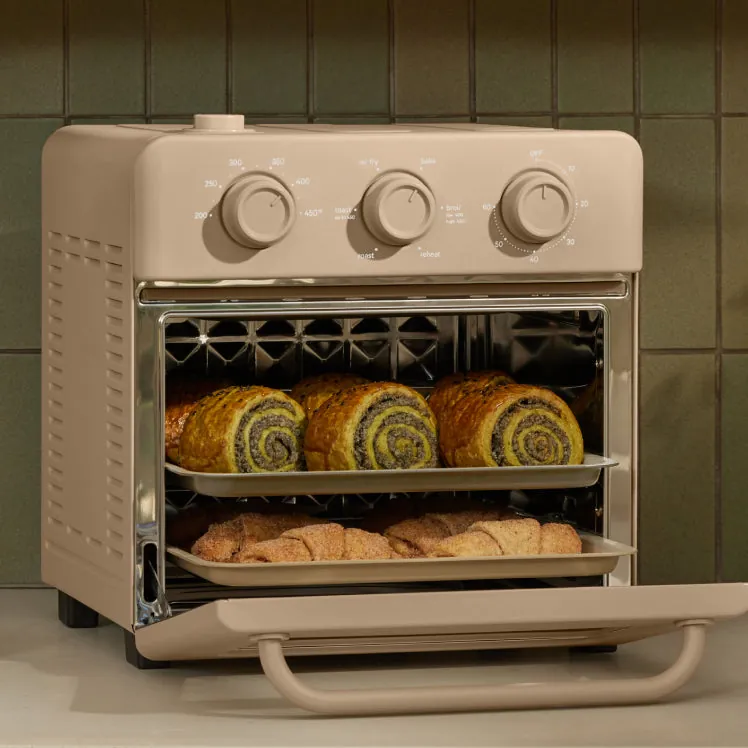
They preheat with the pan, not after it
A cold sheet pan dropped into a hot oven pulls heat out of the air for the first minute or two. People who get crisp roasted vegetables put the empty pan in during preheat, let it soak up heat, then add oiled vegetables to the hot pan. The sizzle when food hits is the sign it worked. If you hear nothing, your pan wasn’t hot enough.
They leave the door alone
Every peek costs heat. The cavity is small, so a 10-second door opening at 400°F drops the air temperature noticeably and the oven has to climb back. Experienced users set the timer, walk away, and use the oven light through the glass door if they want to check. They also resist the urge to open early “just to see” — the Ready light is the answer, not a guess.
They know what not to bother with
Broil doesn’t need preheating on this oven; the element runs full power and food goes in right away. Toast is the same. People who preheat for toast just dry out their bread and waste 4 minutes. Match the setting to the job.
When preheat goes wrong
Most preheat problems show up as uneven cooking or long waits. The table below matches what you notice to the likely cause and the first thing to try.
| What you notice | What it usually means | What to do first | How to stop it happening again |
|---|---|---|---|
| Ready light never comes on | Dial sits between settings | Turn dial firmly to a mark | Feel for the click at each mark |
| Food burns on top | Rack too high | Move to middle position | Use middle rack by default |
| Food pale after full time | Oven never preheated | Wait for the light next time | Set a 5-minute timer |
| Smoke during preheat | Grease or crumbs inside | Stop, let cool, wipe out | Wipe after every use |
| Uneven browning | Tray too large for cavity | Use a smaller tray | Leave air gaps at the sides |
| Takes much longer than 6 min | Cold room or heavy pan | Add 1-2 minutes | Preheat pan with the oven |
| Nothing heats at all | No power or bad outlet | Check plug and breaker | Test the outlet with a lamp |
If the oven gets no power from a working outlet, stop there. Don’t open the housing or touch anything inside — that’s a job for the manufacturer’s service team or a qualified appliance technician. That’s a job for the manufacturer’s service team or a qualified appliance technician.
The safety and use rules that apply
Our Place publishes the operating instructions for the Wonder Oven in the manual that ships with the unit and on its own website. Follow those over anything you read elsewhere, including this page.
The main rules are simple. Keep the oven on a heat-safe surface with clearance around the vents — the manual states the exact clearance, and it matters because restricted airflow is a fire risk. Never put foil over the heating elements. Never use the oven as a storage space when it’s off, because someone will turn it on with something inside.
For food safety, the USDA sets the internal temperatures that matter: 165°F for poultry, 160°F for ground meat, 145°F for whole cuts of meat and fish. Reheated leftovers should hit 165°F too. Your Wonder Oven’s dial setting isn’t the same as the food’s internal temperature — check the food itself with a thermometer.
If your oven arrives damaged, or trips your breaker every time you use it, that’s a warranty and electrical issue. Contact Our Place support or a licensed electrician. Don’t attempt repairs yourself.
What a Wonder Oven really costs you
The money side is straightforward: the oven itself is a one-time purchase, and you can check today’s price on Our Place’s own site, because it changes with sales. Running it costs electricity, and that depends on your local rate and how long you cook — a 5-minute preheat plus 20 minutes of baking at 400°F uses a modest amount, but your utility bill is the only honest source for your number.
The real cost is time and attention. Preheating adds about 5 minutes to every baking session. Over a week of daily use, that’s roughly half an hour of waiting. You can cut it by planning: preheat while you chop vegetables, not after.
What moves the cost up: cooking at 450°F often, running two trays at once, and preheating for things that don’t need it, like toast. What moves it down: using the Toast and Broil settings when they fit the job, and batch-cooking so one preheat covers two dishes.
There’s also a hidden cost people miss — a cheap baking tray that warps at high heat. Warped trays cause uneven browning, and you end up cooking things twice. A sturdy pan costs more up front and saves you the redo.
Keeping your Wonder Oven in good shape
Wipe the interior after it cools, every time you cook something greasy. A clean cavity preheats faster and doesn’t smoke. Crumbs on the bottom element are the number one cause of smell during preheat.
Check the door seal by closing it on a strip of paper and pulling gently. If the paper slides out with no resistance, heat is escaping and your preheat times will creep up. On most countertop ovens the seal is part of the door assembly — if it’s failing, contact Our Place support about a replacement rather than trying to fix it.
The sign your oven needs attention: preheat times getting longer over a few weeks, or the Ready light behaving differently than it used to. When that happens, note the times and contact support with your numbers. They can tell you whether it’s normal or a fault.
When the Wonder Oven isn’t the right tool
If you’re cooking for six or more people, this oven is too small. Two trays fit at most, and stacking them wrecks your results. Use a full-size oven instead — the preheat takes longer, around 10 to 15 minutes, but the capacity is what you actually need.
If you need a hard sear on steak or a crisp pizza crust at 500°F and above, a countertop oven won’t get you there reliably. Use a cast-iron pan on the stove, or a grill. The Wonder Oven bakes and roasts well; it doesn’t replace high-heat searing.
And if your oven has an electrical fault — sparking, a burning smell from the cord, a breaker that trips every time — stop using it. That’s not a preheat problem. Unplug it and contact Our Place support or a licensed electrician. Never open the housing yourself.
Frequently asked questions
How long does it take to preheat a Wonder Oven?
About 4 minutes at 350°F and 5 to 6 minutes at 450°F, assuming an empty cavity and a room near 70°F. A cold pan inside adds roughly 1 minute. The Ready light coming on is your confirmation, not the clock.
Can you put food in while it’s preheating?
No, for most recipes. Food going in cold absorbs heat and stretches the preheat, and baked goods rise poorly in a warming oven. The exception is when a recipe wants a hot pan — then the empty pan goes in, and the food waits.
Why is my Wonder Oven not heating up?
Check the plug and the outlet first, then your breaker. If a lamp works in the same outlet and the oven still stays cold, the fault is inside the unit. Don’t open it — contact Our Place support or a qualified appliance technician.
Is it safe to leave the Wonder Oven while it preheats?
Yes, for the few minutes a preheat takes, as long as it sits on a heat-safe surface with the vent clearance the manual specifies and nothing flammable is nearby. Never leave it running unattended for long cooking sessions, and never leave it on overnight.
What temperature should I set for preheating?
Set exactly what your recipe says. Rounding up to preheat faster doesn’t work — the oven just overshoots and your food cooks too hot. If the recipe says 375°F, set 375°F and wait for the light.
Does the Wonder Oven need preheating for toast?
No. The Toast setting runs hot and fast by design, and bread goes in cold. Preheating for toast just dries the slice out and wastes about 4 minutes of your time.
What happens if I skip preheating?
Your food starts cooking from a cold cavity, so it needs extra time and browns unevenly. Thin items like cookies and frozen fries suffer most. For casseroles and reheated leftovers, the difference is smaller but still there.
Does preheating matter for reheating leftovers?
Yes, for safety and texture. Reheated food should reach 165°F internally, per USDA guidance, and a preheated oven gets you there faster and more evenly. Cover the dish so the top doesn’t dry out while the middle warms.
Your first move with the Wonder Oven
Set the top dial to Bake, set your temperature, close the door and start a 5-minute timer. Expect the Ready light before the timer ends — that’s your green flag to load the food quickly and reset your cooking clock.
If the light never comes on, or the oven stays cold on a working outlet, stop and contact Our Place support. Don’t keep waiting it out. A unit that never signals Ready isn’t slow to heat, it isn’t heating, and every extra minute you leave food inside is a minute closer to raw in the middle and charred at the edges.
One thing that trips people up: the light cycles on and off during a normal bake. That’s the thermostat holding temperature, not a fault. Judge the oven by the first Ready, not by whether the light stays lit.

Hello, This is Annie Walker, a 38-year-old blogger, founder, and editor of Cookware Guider from NY, USA. I am a cookware fanatic and passionate cooker. I love to cook with different types of cooking appliances (example: all types of cookware, rice cookers, slow cookers, etc) almost every day in my kitchen. I love to share my experience with my readers in my blog. Also, I enjoy helping people to solve their problems through my website. You can follow me on Twitter & Pinterest. To know details about my blog please check the about us page.