
In every kitchen, sharp knives make cooking safer, faster, and more enjoyable. But keeping knives sharp is hard work for most home cooks. Many people forget to sharpen their knives or do it wrong, leading to dull blades that struggle to cut. This is why self sharpening knife blocks are becoming popular. These blocks claim to keep your knives sharp with almost no effort. But is a self sharpening knife block really good? Let’s explore how they work, their benefits, downsides, how they compare to other sharpening methods, and whether they are the right choice for your kitchen.
What Is A Self Sharpening Knife Block?
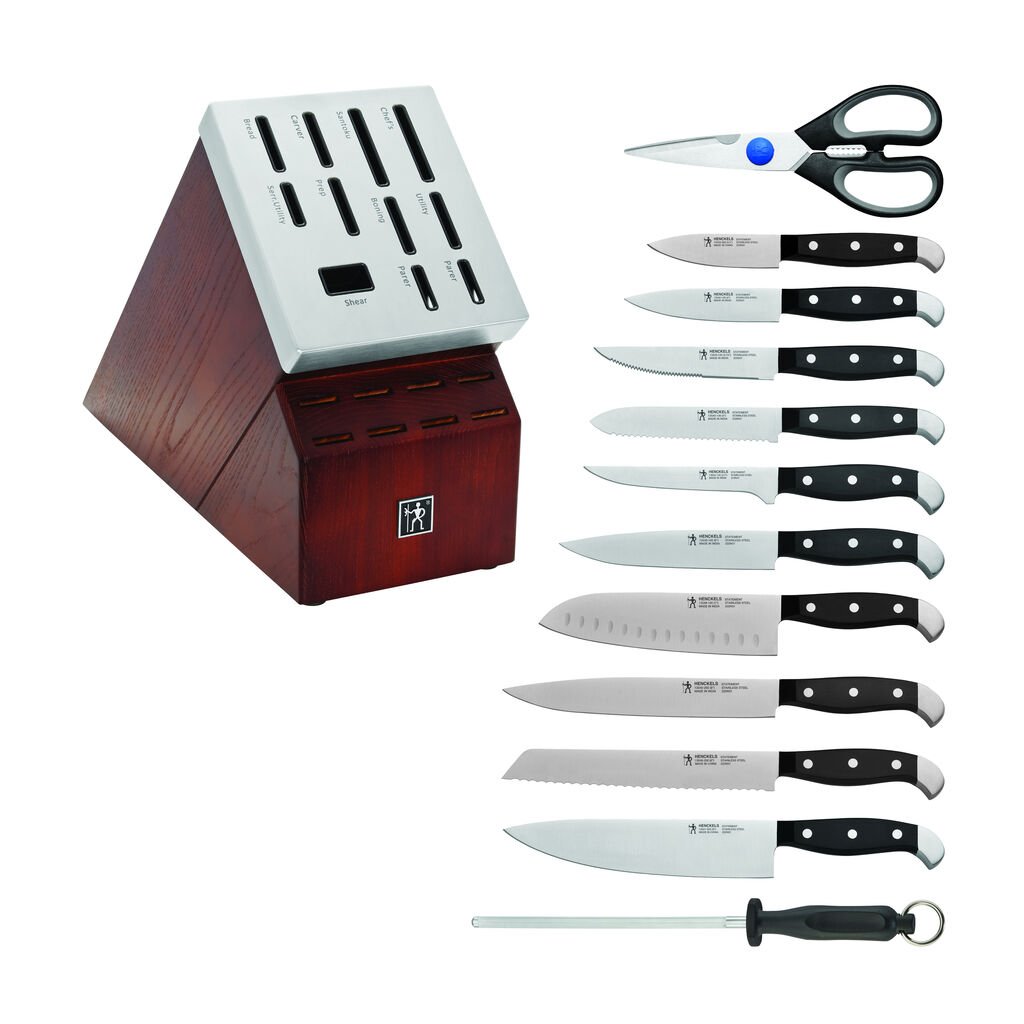
A self sharpening knife block is a storage block with built-in sharpening tools. Each time you pull out or put back a knife, the blade passes through a slot with sharpening material—usually made of ceramic or tungsten carbide. This process hones or sharpens the edge a little bit every time, keeping the knives ready to use.
There are two main types:
- Honing blocks: These use ceramic rods to realign the blade. They keep a sharp edge but don’t remove much metal.
- Sharpening blocks: These use harder materials like tungsten carbide. They actually grind away some metal to reshape a dull edge.
Most self sharpening blocks combine both types. For example, slots for everyday knives may hone the edge, while slots for very dull knives use a more aggressive sharpener.
How Do Self Sharpening Knife Blocks Work?
The key to a self sharpening block is its built-in sharpening slots. When you slide a knife into or out of the block, the blade rubs against the sharpening material at a set angle. This motion is similar to using a sharpening steel or stone, but much easier for beginners.
Most blocks have:
- Sharpening slots for chef’s knives: These may use tungsten carbide for real sharpening.
- Honing slots for other knives: Usually lined with ceramic for gentle edge maintenance.
- Special slots for serrated knives: Some blocks do not sharpen serrated blades at all.
This automatic process means you don’t have to think about sharpening. Your knives stay sharp as you use them.
Credit: www.henckels.com
Benefits Of Self Sharpening Knife Blocks
Self sharpening knife blocks solve several common problems for home cooks. Here are the main benefits:
- Convenience
- You don’t need to buy or learn how to use a sharpening stone or steel.
- Maintenance happens automatically with daily use.
- Consistent sharpness
- Knives stay sharp much longer because they are honed every time you use them.
- No more working with dull blades that slow you down or cause accidents.
- Time saving
- No need to set aside time for sharpening sessions.
- Blades are always ready to go.
- Safety
- Sharp knives are safer because they require less force to cut.
- The risk of the knife slipping and causing injury is lower.
- Beginner-friendly
- No special skills required.
- Great for people who are unsure how to sharpen knives correctly.
- Storage and protection
- The block keeps knives organized and protects the blades from damage.
Real-world Example
Imagine you are making dinner after a long day. You reach for your chef’s knife and it slices through a tomato smoothly. You don’t have to stop and sharpen the knife, or struggle with a dull edge. This is the everyday benefit a self sharpening block provides.
Downsides And Limitations
While self sharpening blocks offer many advantages, they are not perfect. Here are some drawbacks to consider:
- Not true professional sharpening
- The built-in sharpeners mainly hone the edge. They cannot repair a very dull or chipped blade.
- Over time, you may still need professional sharpening.
- May wear blades faster
- Aggressive sharpeners (like tungsten carbide) remove metal each time you use them.
- This can shorten the life of your knives if used too often.
- Limited to included knives
- Most blocks are designed for a specific set of knives.
- If you buy extra knives, they may not fit or sharpen well in the block.
- Does not work for all blade types
- Many blocks cannot sharpen serrated or specialty knives.
- Japanese knives with a very fine angle may get damaged.
- Higher cost
- Self sharpening blocks are usually more expensive than regular blocks.
- No control over sharpening angle
- The sharpening slots use a fixed angle. If you prefer a different angle for your knives, you cannot change it.
Non-obvious Insight
Some people expect their knives to stay “razor sharp” forever with a self sharpening block. In reality, these blocks keep your knives sharp for daily cooking, but they will not restore a badly damaged or very dull knife. A professional sharpening is still needed every few years.
How Do They Compare To Other Sharpening Methods?
To decide if a self sharpening knife block is good for you, it helps to compare with other common methods. Here is a quick look at how different sharpening options stack up:
| Method | Skill Needed | Time Required | Sharpness Level | Blade Life Impact |
|---|---|---|---|---|
| Self Sharpening Block | Low | Very Low | Good for daily use | May wear faster |
| Sharpening Steel | Medium | Low | Good maintenance | Gentle |
| Sharpening Stone | High | Medium to High | Very sharp | Gentle if used right |
| Electric Sharpener | Low | Low | Very sharp | Can remove too much metal |
| Professional Service | None | High (send out knives) | Razor sharp | Best for blade life |
Key Takeaway
If you want ease and daily sharpness with little effort, a self sharpening block is hard to beat. But if you want maximum sharpness or to protect expensive knives, a stone or professional service is better.
Types Of Self Sharpening Knife Blocks
Not all self sharpening blocks are the same. Here are the main types you will see:
- All-in-one knife sets
- These include knives and a matching block. Each slot is tailored to a specific knife.
- Most popular brands offer these as a bundle.
- Universal self sharpening blocks
- Fit many different knives, but the sharpening may not work as well as custom sets.
- Hybrid blocks
- Only some slots have sharpening, usually for chef’s knives and utility knives.
- Other slots are for storage only.
Comparison: All-in-one Vs Universal
| Type | Fits All Knives? | Sharpening Quality | Cost |
|---|---|---|---|
| All-in-one Set | No | High | Higher |
| Universal Block | Yes | Medium | Medium |
| Hybrid Block | Some | Good for main knives | Medium |
All-in-one sets give the best results but limit your choice of knives. Universal blocks offer flexibility but may not sharpen every knife well.
What To Look For When Buying A Self Sharpening Knife Block
If you decide a self sharpening block is right for you, here are important things to check:
- Material of sharpening slot
- Ceramic is gentle, good for honing.
- Tungsten carbide is more aggressive, good for sharpening but wears blades faster.
- Number and type of slots
- Make sure the block has slots for all your main knives.
- Check if it works for serrated or specialty knives if you use them.
- Quality of included knives
- If buying a set, research the knife steel and handle comfort.
- Cheap knives in a fancy block are not a good deal.
- Sharpening angle
- Most blocks use a 20-degree angle, which is good for Western knives.
- Not ideal for Japanese knives (which need a 15-degree angle).
- Size and design
- The block should fit your counter space and match your kitchen style.
- Brand reputation
- Choose a trusted brand with good reviews and a warranty.
Example: What Makes A Good Block?
The Calphalon Precision Self-Sharpening Block is a popular choice. It uses ceramic sharpeners for most slots and fits the included knives perfectly. However, it does not sharpen serrated blades. It is best for people who want sharp chef’s and utility knives without much effort.
Common Myths And Misunderstandings
Some shoppers have wrong ideas about self sharpening blocks. Here are a few common myths, and the truth behind them:
- Myth: “Self sharpening blocks make knives razor sharp all the time.”
- Fact: They keep the edge sharp for normal cooking, but will not fix badly damaged or very dull blades.
- Myth: “You never need other sharpening tools.”
- Fact: Every few years, professional sharpening is still helpful.
- Myth: “They work for all knives.”
- Fact: Many blocks do not sharpen serrated or very thin Japanese knives.
- Myth: “They do not remove metal from the knife.”
- Fact: Some sharpeners, especially tungsten carbide, do remove metal and can wear down blades.

Credit: www.amazon.com
Who Should Buy A Self Sharpening Knife Block?
A self sharpening block is a good choice if you:
- Use your knives often but do not want to learn sharpening skills.
- Prefer convenience and speed over perfect sharpness.
- Own Western-style knives (20-degree edge).
- Want a tidy, organized kitchen.
- Are a beginner or have a busy lifestyle.
It is less ideal if you:
- Own very expensive or Japanese knives.
- Want complete control over sharpening angle.
- Use many specialty knives that may not fit the block.
Care And Maintenance Tips
Even with a self sharpening block, some care is needed:
- Clean knives before storing
- Food particles can get stuck in the slots and damage the sharpening material.
- Always wipe knives dry before putting them back.
- Do not force knives
- Insert and remove blades gently to avoid chipping.
- Check sharpening slots
- If you notice dullness, the slots may be dirty or worn out. Some blocks let you replace the sharpening inserts.
- Get professional sharpening occasionally
- Every 1-2 years, professional sharpening will restore the blade and fix any minor damage.
Pro Tip
Some blocks have removable sharpening inserts. Clean them every few months to keep the sharpening action effective.
Are Self Sharpening Knife Blocks Safe For All Knives?
Not all knives benefit from self sharpening blocks. Here’s why:
- Japanese knives: These have harder, thinner blades and a sharper angle (15 degrees). Most self sharpening blocks are set for 20 degrees, which can damage Japanese knives.
- Serrated knives: The sharpening slots cannot reach into the serrations, so the block will not sharpen them.
- Custom or handmade knives: Expensive or custom blades may need special care.
If you own these types of knives, you may be better off with a traditional block and sharpening them separately.
Environmental And Cost Considerations
A key question: Will a self sharpening block save you money or help the environment?
- Long-term cost: If you buy a block with high-quality knives, you may not need to replace knives often. But if the block wears down blades quickly, you may buy new knives more often.
- Sharpening materials: Some blocks use replaceable inserts, which is better for the environment than replacing the whole block.
- Value: Most users find the cost worth it for the convenience, but serious cooks may prefer investing in sharpening stones.
Popular Brands And Models
Some top brands for self sharpening blocks include:
- Calphalon
- Known for reliability and smart design.
- Often uses ceramic sharpeners.
- Sabatier
- Classic French brand.
- Blocks often have a mix of honing and sharpening slots.
- Farberware
- Good entry-level options for small budgets.
- Zwilling J.A. Henckels
- Premium German knives.
- Some sets include self sharpening blocks.
- Shun
- Offers some hybrid blocks for Japanese knives, but check angle compatibility.
When shopping, read reviews and check if the sharpening system matches your needs.
Real User Experiences
Most home cooks who switch to self sharpening knife blocks report:
- Less frustration with dull knives.
- Cooking feels faster and safer.
- Some notice their knives wear out faster, especially with daily use.
- Serious chefs often prefer manual sharpening for control.
A non-obvious insight: People who cook often but dislike knife maintenance are the happiest with these blocks. Those who enjoy sharpening as a skill may find the blocks too limiting.
Frequently Asked Questions
How Long Does A Self Sharpening Knife Block Last?
Most self sharpening blocks last 5–10 years, depending on the quality and how often you use them. The sharpening inserts may wear out before the block itself, but some brands sell replacements. Taking care to clean knives before storage can extend the block’s life.
Can You Put Any Knife In A Self Sharpening Block?
No, not every knife will fit or be safe in a self sharpening block. These blocks are usually designed for the knives they come with. Putting a knife with a different shape or edge angle (like a Japanese or custom knife) may cause poor sharpening or even damage the blade.
Do Self Sharpening Blocks Make Knives Razor Sharp?
Self sharpening blocks keep knives sharp enough for daily cooking, but they do not give a true “razor edge. ” For that, you still need a sharpening stone or a professional service sometimes. The main goal is to avoid dullness, not to create the sharpest edge possible.
Are Self Sharpening Knife Blocks Safe For Children?
These blocks are as safe as regular knife blocks, but the knives inside are often sharper. Always keep the block out of reach of children, and never let young kids handle kitchen knives without supervision.
Where Can I Learn More About Sharpening Methods?
For more detailed information about knife sharpening, visit the Wikipedia page on Sharpening.
.jpg?sw=1024&sm=fit)
Credit: www.henckels.com
Final Thoughts
A self sharpening knife block is a smart choice for many home cooks. It brings convenience, keeps knives sharp for daily tasks, and reduces the need for special skills. There are some trade-offs—especially for expensive or specialty knives—but for most people, the ease of always having a sharp knife is a big win. If you value speed and safety in the kitchen and don’t want to worry about sharpening, a self sharpening block is likely a good investment. Remember to match the block to your knives and cooking style for the best results.

Hello, This is Annie Walker, a 38-year-old blogger, founder, and editor of Cookware Guider from NY, USA. I am a cookware fanatic and passionate cooker. I love to cook with different types of cooking appliances (example: all types of cookware, rice cookers, slow cookers, etc) almost every day in my kitchen. I love to share my experience with my readers in my blog. Also, I enjoy helping people to solve their problems through my website. You can follow me on Twitter & Pinterest. To know details about my blog please check the about us page.