
Non stick frying pans are a staple in many kitchens. They make cooking and cleaning easier—until food starts sticking or the surface looks dull. If you want your pan to last, you need to clean it the right way. Many people unknowingly damage their non stick pans with harsh tools or strong detergents.
Let’s dive into the best ways to clean your non stick frying pan, avoid common mistakes, and keep it performing like new.
Why Non Stick Frying Pans Need Special Care
Non stick pans are coated with materials like PTFE (best known as Teflon) or ceramic. This coating gives them their unique “food slides off” magic. However, it’s also delicate. Using the wrong cleaning methods can scratch or weaken this surface, making your pan less effective and even unsafe over time. According to a 2022 consumer report, over 40% of non stick pans are replaced due to cleaning damage, not because the non stick quality naturally wore out.
Essential Cleaning Tools And Materials
You don’t need fancy cleaners or expensive gadgets. In fact, less is often more. Here’s what you should have on hand:
- Soft sponge (non-abrasive)
- Mild dish soap
- Warm water
- Microfiber cloth or soft towel
- Baking soda (for stubborn stains)
- Wooden or silicone spatula (to loosen food bits)
- White vinegar (for deep cleaning)
Avoid steel wool, harsh scouring pads, or strong chemicals. These can scratch or strip the non stick coating.
Step-by-step Guide: How To Clean Non Stick Frying Pan
1. Let The Pan Cool Down
Never place a hot non stick pan under cold water. This sudden temperature change can warp the metal or cause micro-cracks in the coating. Always let your pan cool to room temperature before cleaning.
2. Wipe Away Excess Oil And Food
Use a paper towel or a soft cloth to gently remove leftover oil and food particles. This prevents greasy buildup and makes washing easier.
3. Wash With Warm, Soapy Water
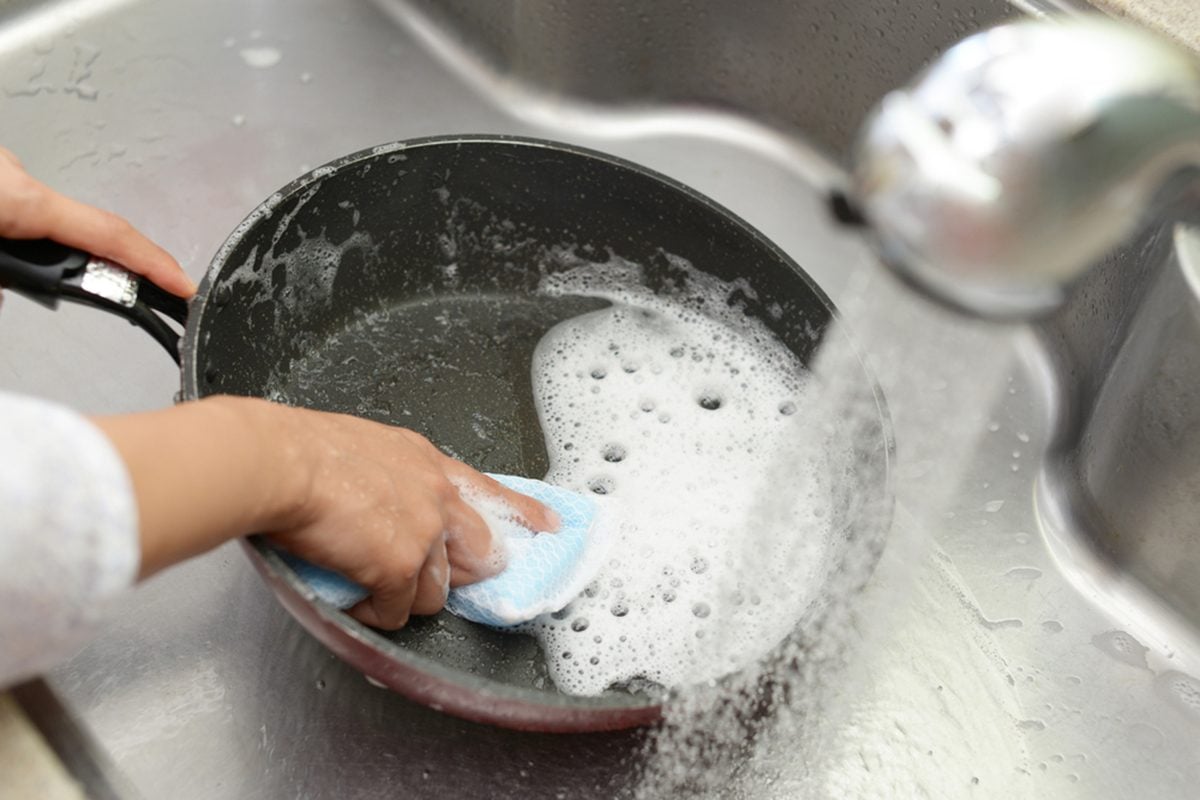
Fill the pan with warm water and add a few drops of mild dish soap. Use a soft sponge to clean the inside and outside of the pan. Gently scrub in circular motions. Pay extra attention to the rim and handle, where grease often hides.
4. Tackle Stubborn Residue
If you notice stuck-on food, don’t scrub harder. Instead, fill the pan with warm, soapy water and let it soak for 15–30 minutes. For tougher spots, sprinkle a little baking soda on the area and gently rub with a damp sponge. Baking soda is mildly abrasive but safe for non stick surfaces.
5. Rinse And Dry Thoroughly
Rinse the pan under warm running water until all soap is gone. Any soap left behind can affect food taste and damage the coating over time. Use a microfiber cloth or soft towel to dry the pan completely. Air-drying can leave water spots and promote rust on the metal parts.
How Often Should You Clean Your Non Stick Pan?
You should clean your non stick frying pan after every use. Even if it looks clean, small food particles and oils can build up, reducing its non stick performance. Regular cleaning also prevents unpleasant odors.
:max_bytes(150000):strip_icc()/ms-nonstick-pan-d517c9929310442d8a1646adcbf104c8.jpg)
Credit: www.marthastewart.com
Common Mistakes To Avoid
Many home cooks make these errors without realizing the damage:
- Using metal utensils: These can scratch the non stick layer. Stick to wood, silicone, or plastic.
- Dishwasher cleaning: Most manufacturers recommend hand washing. Dishwasher heat and detergents can weaken the coating.
- High heat cooking: Overheating damages the surface and makes cleaning harder.
- Abrasive scrubbers: Steel wool and rough sponges will scratch and ruin your pan.
- Stacking pans: Placing heavy pans on top of each other can chip or scratch the coating. Use a soft cloth between pans if you must stack them.
How To Remove Burnt-on Food Without Damage
Burnt food happens to everyone. Here’s how to handle it without harming your non stick pan:
- Soak Immediately: Fill the pan with warm, soapy water and let it sit for at least 30 minutes.
- Use Baking Soda Paste: Mix baking soda with a little water to form a paste. Apply it to the burnt area and let it sit for 15–20 minutes.
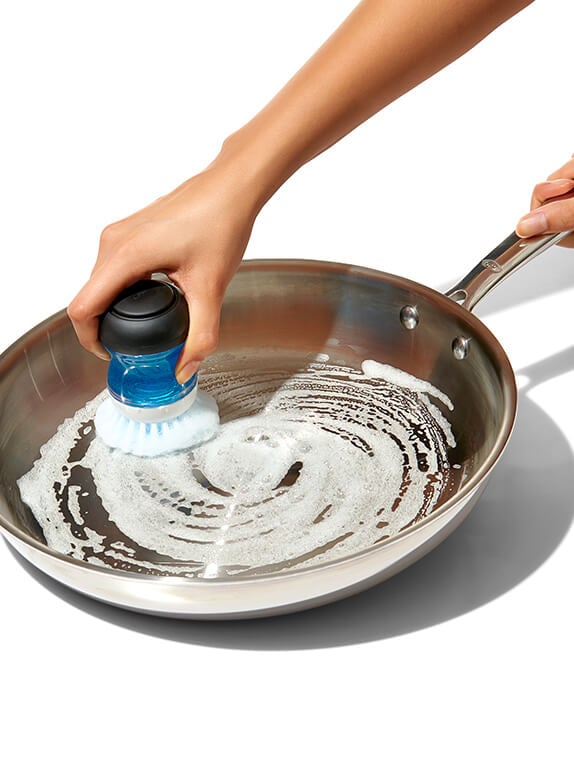
- Gentle Scrubbing: Use a soft sponge or nylon brush to gently remove the residue.
- Rinse and Repeat: You may need to repeat these steps for stubborn spots.
Never use sharp knives or metal scrapers to remove burnt food, as this will scratch the coating.
Credit: www.oxo.com
Deep Cleaning Your Non Stick Frying Pan
Over time, even careful cleaning leaves behind a thin layer of oil or stains. Deep cleaning helps restore the non stick surface:
How To Deep Clean:
- Add equal parts water and white vinegar (about 1 cup each) to the pan.
- Simmer for 5–10 minutes on low heat. This loosens grease and removes stains.
- Let the pan cool, then wash as usual with warm, soapy water.
- Dry thoroughly before storing.
Deep cleaning once a month keeps your pan in top shape.
Comparing Cleaning Methods
Here’s a simple comparison of common cleaning methods for non stick pans:
| Method | Effectiveness | Pan Safety | Time Needed |
|---|---|---|---|
| Hand washing with soft sponge | High | Very Safe | 2–5 min |
| Dishwasher | Medium | Risky | Varies |
| Soaking & baking soda | High | Safe | 15–30 min |
| Steel wool scrubbing | High | Very Risky | 2–5 min |
When Is It Time To Replace Your Non Stick Pan?
Even with perfect care, no non stick pan lasts forever. Here are signs it’s time for a new one:
- Peeling or flaking coating
- Food sticks even after cleaning
- Deep scratches or chips
- Discoloration that doesn’t wash off
Most non stick pans last 2–5 years, depending on usage and care. If you notice any of these signs, it’s safer to replace your pan. Cooking with a damaged non stick surface can release harmful substances.
Tips To Make Your Non Stick Pan Last Longer
- Cook on low to medium heat. High heat breaks down the coating faster.
- Use enough cooking oil to protect the surface, even if the pan seems non stick.
- Store carefully. Hang your pan or place a soft towel between pans.
- Never use aerosol cooking sprays. These can leave a sticky residue that is hard to clean.
- Season your pan occasionally. Rub a small amount of oil onto the surface and heat gently for a few minutes. This can help maintain the non stick effect, especially for ceramic coatings.
Comparing Non Stick Pan Coatings
Not all non stick pans are the same. Here’s a quick look at the main types:
| Coating Type | Non Stick Power | Durability | Cleaning Ease |
|---|---|---|---|
| PTFE (Teflon) | Excellent | Good | Easy |
| Ceramic | Good | Fair | Easy |
| Anodized Aluminum | Good | Excellent | Medium |
| Enameled Cast Iron | Medium | Excellent | Medium |
Different coatings may need slightly different cleaning routines. Always check the manufacturer’s instructions.
What To Do About Sticky Or Discolored Non Stick Pans
If your pan feels sticky or has brownish stains, it’s often due to oil residue. Here’s how to fix it:
- Mix baking soda and water to form a paste and gently scrub the surface.
- Vinegar soak (as described earlier) can remove stubborn discoloration.
- Avoid cooking sprays in the future, as these are a common cause.
Regular deep cleaning can prevent these issues.
Environmental Impact: Dispose Of Old Non Stick Pans Responsibly
When your pan reaches the end of its life, don’t just throw it in the trash. Many non stick pans can be recycled as metal scrap. Remove the handle if possible, and check with your local recycling center. This keeps waste out of landfills and reuses valuable materials. For more details, visit the EPA’s recycling resource.
Frequently Asked Questions
How Do I Clean A Non Stick Frying Pan After Cooking Eggs?
Let the pan cool, then wipe out any leftover egg with a paper towel. Wash with warm, soapy water using a soft sponge. If residue remains, soak the pan for 10 minutes before gently scrubbing. Never use metal scrubbers.
Can I Put My Non Stick Frying Pan In The Dishwasher?
It’s best not to. The dishwasher’s heat and strong detergents can damage the non stick coating over time. Hand washing is gentler and keeps your pan lasting longer.
What Should I Do If My Non Stick Pan Starts Sticking?
Try deep cleaning with baking soda and vinegar to remove buildup. If sticking continues, your pan may be worn out and need replacement.
Is It Safe To Use Baking Soda On Non Stick Pans?
Yes, baking soda is mildly abrasive but safe for non stick surfaces. It helps remove stains without scratching.
How Long Should A Good Non Stick Frying Pan Last?
With proper care, most non stick pans last 2–5 years. Longevity depends on how often you use and clean it, and whether you avoid common mistakes.
Taking care of your non stick frying pan isn’t hard—but it does require the right approach. By cleaning gently, avoiding harsh tools, and deep cleaning when needed, you can keep your pan working like new for years. This saves you money, makes cooking more enjoyable, and keeps your meals healthy.
Treat your pan well, and it will reward you with perfect eggs, pancakes, and more every time.
Credit: www.tasteofhome.com

Hello, This is Annie Walker, a 38-year-old blogger, founder, and editor of Cookware Guider from NY, USA. I am a cookware fanatic and passionate cooker. I love to cook with different types of cooking appliances (example: all types of cookware, rice cookers, slow cookers, etc) almost every day in my kitchen. I love to share my experience with my readers in my blog. Also, I enjoy helping people to solve their problems through my website. You can follow me on Twitter & Pinterest. To know details about my blog please check the about us page.