
A sharp knife makes every kitchen task easier, safer, and more enjoyable. But knives lose their edge over time, even the best ones. If you own a Farberware knife sharpener, you have a reliable tool to bring your blades back to life. Knowing how to use it properly can make a big difference in your cooking and your safety. Many people struggle with sharpening, worry about damaging their knives, or simply don’t know where to start. This guide will help you understand your Farberware sharpener, show you step-by-step how to use it, and explain how to keep your knives sharp for years. With clear instructions, practical advice, and expert tips, you’ll soon feel confident handling this useful kitchen tool.
Understanding Farberware Knife Sharpeners
Farberware offers several types of knife sharpeners. Each has its own design and purpose, but they all help restore a knife’s sharp edge. Before you start sharpening, it’s important to know which kind you have and what it does.
Types Of Farberware Knife Sharpeners
Most Farberware sharpeners fall into three main categories:
- Manual pull-through sharpeners: These are the most common. You hold the sharpener on the counter, then pull the knife blade through slots with sharpening materials.
- Electric sharpeners: These use motorized wheels or stones to sharpen the blade with less effort.
- Sharpening steels (rods): These are not classic sharpeners but are used to hone the blade, keeping it aligned.
Most home cooks use the manual pull-through sharpener, so this article will focus mainly on that style. However, many tips also apply to electric models and steels.
Key Features
Farberware sharpeners often have:
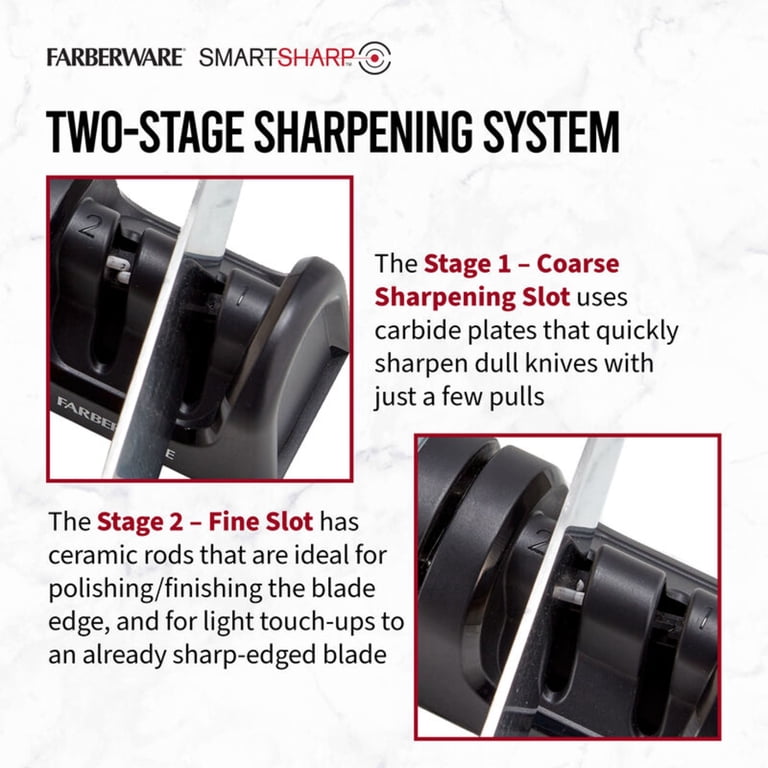
- Multiple slots: Usually “coarse” for dull knives, “fine” for finishing or routine sharpening.
- Non-slip base: For safety during sharpening.
- Ergonomic handle: Makes it comfortable to hold.
Check your sharpener’s manual to see the exact slot order and their functions. If you lost the manual, look at the slots—often they’re labeled “coarse” and “fine. ”
How Knife Sharpeners Work
Knife sharpeners remove tiny amounts of metal from the blade to recreate a sharp edge. The coarse slot uses harder abrasives to shape the edge, while the fine slot polishes and finishes it. Sharpening steels don’t remove metal; they realign the blade.
Preparing Your Knife And Sharpener
Getting ready to sharpen is important, but many people skip these steps. Skipping can lead to mistakes, uneven sharpening, or even injuries.
Cleaning Your Knife
Always clean your knife before sharpening. Dirt, food, or grease can damage the sharpener or make sharpening less effective. Wash with warm soapy water, rinse, and dry thoroughly.
Inspecting The Blade
Look closely at your knife edge. Is it dull, chipped, or bent? If the blade has serious damage (big chips or deep nicks), a pull-through sharpener may not fix it. For regular dullness, it works well.
Setting Up Your Sharpener
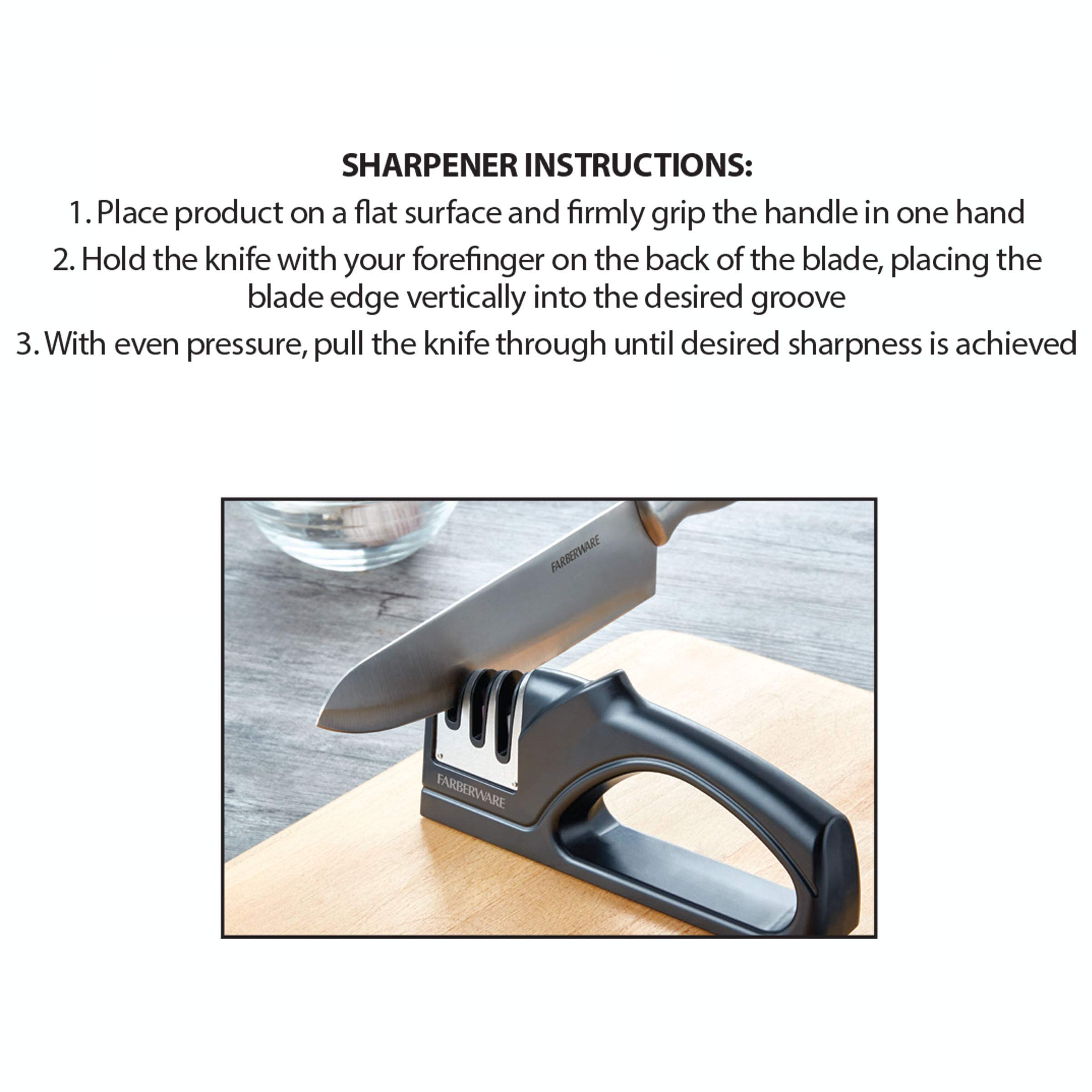
Put your Farberware sharpener on a flat, stable surface. Make sure the non-slip base is in contact with the countertop. Grip the handle firmly with your non-dominant hand. The sharpener should not move during use.
Choosing The Correct Slot
If your knife is very dull, start with the coarse slot. If it’s only slightly dull or you sharpen often, start with the fine slot. Never use the coarse slot on a new or well-maintained knife, as it removes more metal.
Credit: www.walmart.com
Step-by-step: How To Use A Farberware Knife Sharpener
Sharpening is simple, but a few details make a big difference. Here’s a clear, practical guide to get the best results.
Step 1: Hold Everything Steady
Place your sharpener securely, grip the handle, and make sure it won’t slip. Hold your knife by the handle, blade facing away from you.
Step 2: Insert The Blade
Put the knife blade into the slot at the heel (the part closest to the handle). Make sure the blade is straight and vertical—don’t tilt it sideways.
Step 3: Pull Through Smoothly
Pull the blade through the slot from heel to tip in one smooth motion. Don’t press down hard; gentle, steady pressure works best. Repeat 3–6 times, depending on how dull the knife is.
Step 4: Switch Slots
After using the coarse slot (if needed), move to the fine slot. Repeat the same process—pull through 3–6 times. The fine slot polishes and finishes the edge.
Step 5: Clean The Knife
After sharpening, wipe the blade with a damp cloth to remove any metal dust. Dry before using.
Step 6: Test The Edge
Check sharpness by slicing a piece of paper or tomato. If the knife glides easily, you’re done. If not, repeat the fine slot pulls.
Common Mistakes To Avoid
- Pressing too hard: Can damage the blade and sharpener.
- Moving too fast: May create uneven edges.
- Using the wrong slot: Can wear out the knife quickly.
- Not cleaning after sharpening: Metal particles can get into food.
How Often Should You Sharpen?
Most home cooks should sharpen their knives every few months. Heavy users (like daily cooks) may need to sharpen monthly. Avoid sharpening too often; it wears out the blade.
Here’s a quick reference:
| Usage | Sharpening Frequency |
|---|---|
| Light (few times/week) | Every 3–4 months |
| Moderate (daily cooking) | Every 1–2 months |
| Heavy (professional use) | Monthly or as needed |
If your knife starts slipping on tomatoes or onions, it’s time to sharpen.
Sharpening Different Knife Types
Most Farberware sharpeners work best for straight-edge knives. If you have other types, follow these tips:
Serrated Knives
Do not use pull-through sharpeners for serrated knives. They can damage the teeth. Instead, use a special sharpener for serrated blades or a professional service.
Specialty Knives
Knives like cleavers or Japanese blades may need special angles or tools. Most Farberware sharpeners use a standard angle (about 20 degrees), suitable for Western knives.
Pocket Knives And Scissors
Some Farberware sharpeners have slots for scissors. Check the manual. For pocket knives, use the same steps as for kitchen knives.
Electric Vs. Manual Sharpeners
Choosing between electric and manual Farberware sharpeners depends on your needs. Here’s a comparison to help:
| Feature | Manual Sharpener | Electric Sharpener |
|---|---|---|
| Ease of Use | Simple, requires some effort | Very easy, minimal effort |
| Control | High control, slow process | Less control, faster process |
| Price | Affordable ($10–$30) | Expensive ($40–$100+) |
| Maintenance | Low, easy to clean | May need repairs, harder to clean |
| Best For | Home cooks | Frequent users, big families |
Manual sharpeners are perfect for most kitchens. Electric models are good for people who sharpen knives often or want quick results.

Credit: www.amazon.sg
Caring For Your Farberware Knife Sharpener
A sharpener works best if you treat it well. Here’s how to keep yours in good shape:
Cleaning
After each use, wipe the slots with a damp cloth. For deeper cleaning, use a brush to remove metal dust. Some sharpeners have removable parts—check your manual.
Storage
Keep your sharpener dry and away from heat. Store it in a drawer or cupboard, not near the stove or sink.
Checking For Wear
Over time, sharpening materials can wear out. If your sharpener stops working well or feels rough, it may be time to replace it.
Avoiding Damage
Never use the sharpener for tools or very thick knives. Only use it for kitchen blades within the recommended thickness.
Practical Tips For Best Results
Many beginners miss these useful details:
- Sharpen before big cooking days: If you plan to cook for guests, sharpen your knives the day before.
- Don’t skip honing: Use a honing steel between sharpenings to keep the edge aligned.
- Use gentle pressure: Hard pressing can ruin the blade.
- Keep the knife vertical: Tilting causes uneven sharpening.
- Sharpen clean, dry knives only: Moisture can damage both blade and sharpener.
- Check the sharpener’s slots regularly: If they feel gritty or clogged, clean them.
Safety Tips When Sharpening
Sharpening knives can be dangerous if you’re not careful. Always follow these safety rules:
- Keep your fingers away from the blade and slot.
- Hold the sharpener firmly.
- Don’t rush—slow, steady pulls prevent accidents.
- Clean up metal dust after sharpening.
- Store sharpeners and knives out of reach of children.
Why Sharp Knives Matter
A sharp knife is safer than a dull one. Dull knives slip, need more force, and can cause accidents. Sharp knives cut food cleanly, saving time and effort. Studies show that kitchen accidents often involve dull blades, not sharp ones.
Keeping your knives sharp can reduce injury risks by up to 30%.
Real-world Example: Sharpening A Chef’s Knife
Imagine you have a Farberware pull-through sharpener and a dull chef’s knife. Here’s how to sharpen it:
- Clean and dry the knife.
- Set the sharpener on the counter, hold the handle.
- Insert the knife in the coarse slot, pull through 4 times.
- Switch to the fine slot, pull through 4 times.
- Wipe the blade and test on a tomato.
- If the knife slices easily, you’re done; if not, repeat fine slot pulls.
Many people forget to test the edge. Always check with paper or soft food.
Comparing Farberware With Other Brands
Farberware sharpeners are popular for their price and simplicity. How do they stack up against other brands?
| Brand | Type | Price Range | Ease of Use | Durability |
|---|---|---|---|---|
| Farberware | Manual/Electric | $10–$50 | Easy | Moderate |
| Chef’sChoice | Electric | $40–$150 | Very easy | High |
| Work Sharp | Manual/Electric | $30–$100 | Easy | High |
| KitchenIQ | Manual | $10–$30 | Easy | Moderate |
Farberware is a great starter brand, but if you need advanced features or heavy-duty use, other brands may suit you better.
Credit: www.amazon.com
Troubleshooting Common Sharpening Problems
Sometimes sharpening doesn’t go as planned. Here’s how to fix common issues:
Knife Still Feels Dull
- Try more passes in the fine slot.
- Make sure the blade is vertical during pulls.
- Clean the sharpener slots.
Uneven Edge
- Slow down and use smooth, steady pulls.
- Don’t tilt the knife.
Sharpener Feels Rough Or Clogged
- Clean with a brush or compressed air.
- If still rough, the sharpener may be worn out.
Blade Gets Scratched
- Use gentle pressure.
- Avoid dirty or greasy knives.
When To Replace Your Sharpener
Most Farberware sharpeners last 2–5 years with regular use. Signs it’s time to replace:
- Slots feel rough or damaged.
- Sharpening takes much longer.
- Metal dust builds up and won’t clean out.
Buying a new sharpener is cheaper than replacing knives.
Non-obvious Insights Beginners Miss
- Sharpening removes metal: Every pull takes away a tiny bit of blade. Too much sharpening can shorten the knife’s life.
- Angle matters: Most Farberware sharpeners set the sharpening angle for you, but if you tilt the knife, you ruin the edge.
- Regular honing keeps knives sharper longer: If you use a honing steel between sharpenings, you don’t need to sharpen as often.
Frequently Asked Questions
How Do I Know If My Knife Needs Sharpening?
If your knife struggles to cut tomatoes or bread, or slips on food, it’s dull. Try slicing paper—if it tears instead of slices, sharpen it.
Can I Sharpen Serrated Knives With Farberware Sharpeners?
No. Pull-through sharpeners can damage serrated blades. Use a dedicated serrated knife sharpener or a professional service.
Is It Safe To Use A Farberware Sharpener On Expensive Knives?
Yes, if you follow instructions and use gentle pressure. Don’t over-sharpen; expensive knives can lose their edge faster if sharpened too much.
How Do I Clean My Farberware Sharpener?
Wipe the slots with a damp cloth after each use. For deeper cleaning, use a brush or compressed air. Avoid soaking in water.
Where Can I Find More Info About Knife Sharpening?
For more detailed guidance, visit Wikipedia’s knife sharpening page.
Final Thoughts
A sharp knife is one of the most important tools in the kitchen. Using a Farberware knife sharpener correctly helps you cook better, safer, and faster. Take time to clean your knife, follow the steps, and use the right slot. Remember, sharpening isn’t just about making the blade sharp—it’s about keeping your knives in top condition for years. Start with gentle, steady pulls and always check your knife’s edge after sharpening. With practice, you’ll get perfect results every time, and your kitchen will feel more professional and efficient.

Hello, This is Annie Walker, a 38-year-old blogger, founder, and editor of Cookware Guider from NY, USA. I am a cookware fanatic and passionate cooker. I love to cook with different types of cooking appliances (example: all types of cookware, rice cookers, slow cookers, etc) almost every day in my kitchen. I love to share my experience with my readers in my blog. Also, I enjoy helping people to solve their problems through my website. You can follow me on Twitter & Pinterest. To know details about my blog please check the about us page.