
Using a steel knife sharpener is a practical skill that can make your kitchen experience safer and more enjoyable. A sharp knife saves time, reduces effort, and helps you cut food cleanly. Dull knives are not just annoying—they are more dangerous, causing slips and injuries.
Many people think sharpening is complicated, but with a steel knife sharpener, you can keep your knives in top shape easily at home.
This guide explains everything you need to know about using a steel knife sharpener. You’ll learn how to choose the right steel, understand the sharpening process, avoid common mistakes, and keep your knives sharp for longer. Whether you’re new to sharpening or want to improve your technique, this article will help you become confident with your steel sharpener.
What Is A Steel Knife Sharpener?
A steel knife sharpener, often called a sharpening steel or knife honing rod, is a long, metal tool used to maintain the edge of a knife. Unlike grinding stones, it doesn’t remove much material from the blade. Instead, it realigns the microscopic teeth on the edge, keeping it sharp and straight.
Most steels are made from hardened metal (often stainless steel), but you can also find ceramic or diamond-coated versions. The classic steel rod is about 10–12 inches long, with a handle for grip and sometimes a guard to protect your hand.
Why Use A Steel Sharpener?
- Keeps knives sharp between major sharpening sessions
- Prevents blade damage from daily use
- Saves money by extending knife life
Steel sharpeners are common in professional kitchens, where chefs maintain their knives daily. Home cooks can benefit too—regular honing reduces frustration and improves safety.
Choosing The Right Steel Knife Sharpener
Picking the best steel sharpener for your kitchen is important. The right tool makes sharpening easier and safer. There are several types of sharpening steels, each with specific advantages.
| Type | Material | Best For | Durability |
|---|---|---|---|
| Classic Steel | Hardened Stainless Steel | Regular maintenance | High |
| Ceramic Steel | Ceramic | Fine honing, sharper edge | Medium |
| Diamond Steel | Steel with Diamond Coating | Quick edge repair | Very High |
How To Pick The Right Steel
- Match steel length to knife size: Choose a steel that is longer than your largest knife blade.
- Consider material: Steel rods are best for regular maintenance. Ceramic and diamond rods give a finer edge but can wear out faster.
- Look for a comfortable handle: A non-slip, ergonomic handle makes sharpening safe and easy.
- Check for a finger guard: Protects your hand during use.
Non-obvious Insight
Most beginners think harder steels are always better. In reality, diamond steels are not for daily use—they remove material quickly and can wear out knives if used too often. For everyday maintenance, classic steel rods are safer.
:max_bytes(150000):strip_icc()/200389815-001_HighRes-56a20eaa3df78cf772717b45.jpg)
Credit: www.thespruceeats.com
Understanding Knife Sharpening Vs. Honing
Many people confuse sharpening and honing. Both are important, but they are not the same. Knowing the difference helps you care for your knives correctly.
Sharpening
- Uses a whetstone or electric sharpener
- Removes metal to create a new edge
- Needed when knife is very dull
Honing
- Uses a steel knife sharpener
- Realigns the edge without removing much metal
- Done frequently to keep edge straight
| Process | Tool Used | Frequency | Effect |
|---|---|---|---|
| Sharpening | Whetstone, Grinder | Every few months | Restores sharpness |
| Honing | Steel Sharpener | Weekly or before use | Maintains sharpness |
Key Tip
If your knife is still dull after honing, it needs sharpening. Honing steels cannot fix a blade with chips or a very blunt edge.
Preparing To Use A Steel Knife Sharpener
Getting ready is simple but important. Preparation ensures safety and makes the process more effective.
Steps To Prepare
- Clean the knife: Wash and dry your knife before sharpening. Dirt can scratch the blade.
- Choose a stable surface: Place a towel or non-slip mat on your counter for grip.
- Inspect the steel rod: Make sure it’s clean and free from damage.
- Use proper lighting: Good visibility helps you maintain the correct angle.
Common Mistake
Many people forget to clean the knife and steel before sharpening. Residue can cause uneven sharpening and damage the blade.
Step-by-step: How To Use A Steel Knife Sharpener
Now, let’s break down the process. Follow these steps to hone your knife safely and correctly.
1. Hold The Steel Correctly
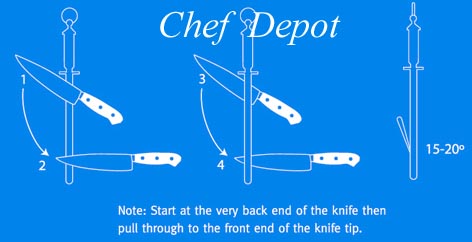
Grip the handle firmly. Place the tip of the steel on the towel or mat, pointing down and away from your body. Hold the steel vertically or at a slight angle.
2. Angle The Knife
Hold the knife at a 15–20 degree angle to the steel. This angle is key for most kitchen knives. For Japanese knives, aim for 12–15 degrees.
3. Swipe The Blade
Place the heel of the knife blade against the top of the steel, near the handle. Using light pressure, swipe the blade down and across the steel, moving from heel to tip. The motion should be smooth, like slicing a thin layer off the rod.
4. Alternate Sides
Repeat the swipe on the other side of the blade. Alternate sides with each stroke. This keeps the edge balanced.
5. Repeat
Do 5–10 strokes per side. For most knives, this is enough. Over-sharpening can damage the blade.
6. Clean The Knife
Wipe the blade after sharpening to remove metal particles. Wash the knife if needed.
Visual Example
Imagine slicing an apple with your knife. The motion you use on the steel should feel similar—controlled, consistent, and smooth.
Tips For Better Sharpening Results
Sharpening is simple, but small details make a big difference. These tips help you achieve a sharper, safer edge.
- Use gentle pressure: Too much force can bend or damage the blade.
- Keep the angle steady: Changing the angle creates uneven edges.
- Sharpen regularly: Hone your knife before each use for best results.
- Don’t rush: Slow, controlled strokes are better than fast, careless ones.
- Check sharpness: After honing, test your knife by slicing paper or tomato.
Non-obvious Insight
Many beginners focus on the number of strokes. However, consistency in angle and pressure is more important than the exact number of strokes. Practicing with a dull knife first can help you develop muscle memory.
Common Mistakes And How To Avoid Them
Sharpening mistakes can damage your knife or make it less effective. Avoid these pitfalls for better results.
1. Wrong Angle
Using the wrong angle makes the edge dull. Keep between 15–20 degrees for most knives.
2. Too Much Pressure
Heavy pressure can scratch or bend the blade. Use gentle, even strokes.
3. Not Alternating Sides
Sharpening only one side creates an uneven edge. Alternate every stroke.
4. Using A Dirty Steel
Dirt or food residue damages the blade. Clean your steel before use.
5. Over-sharpening
Too many strokes can remove metal and weaken the knife. 5–10 strokes per side is enough.
Safety Tips When Using A Steel Knife Sharpener
Knife sharpening should be safe and easy. Follow these precautions:
- Keep fingers away from the blade edge
- Use a non-slip mat under the steel
- Always sharpen away from your body
- Never use a damaged steel rod
- Store the steel out of reach of children
Extra Safety Tip
If you’re nervous, start with a dull knife until you’re comfortable with the motion.
:max_bytes(150000):strip_icc()/winners-graphic-resized-sea-honing-steels-test-messermeister-12-1200-grit-ceramic-sharpening-rod-ashlee-redger-40-a6423424ed454c639fe82d0a40f2bacd.jpg)
Credit: www.seriouseats.com
Maintaining Your Steel Knife Sharpener
Your steel rod needs care to stay effective. Keeping it clean and undamaged will make sharpening easier.
How To Clean A Steel Sharpener
- Wash with mild soap and water after use
- Dry completely to prevent rust
- Avoid harsh chemicals or abrasive cleaners
Storage Tips
- Store upright or in a knife block
- Keep away from moisture and heat
When To Replace
A steel sharpener lasts years with good care. Replace it if you see deep grooves, rust, or it feels rough and uneven.
Comparing Steel Knife Sharpeners To Other Sharpening Tools
Sharpening steels are just one option. Here’s how they compare to other tools.
| Tool | Ease of Use | Edge Quality | Maintenance | Best For |
|---|---|---|---|---|
| Steel Sharpener | Easy | Good (for maintenance) | Low | Daily honing |
| Whetstone | Medium | Excellent | Medium | Sharpening dull knives |
| Electric Sharpener | Very Easy | Good | Low | Quick sharpening |
| Pull-Through Sharpener | Very Easy | Fair | Low | Occasional sharpening |
Practical Example
If you cook daily, a steel sharpener keeps your knives ready. If your blade is very dull or damaged, use a whetstone or electric sharpener first, then maintain with steel.
How Often Should You Use A Steel Knife Sharpener?
Frequency depends on how often you cook and the type of knives you have.
- Professional chefs: Hone knives before every shift or meal.
- Home cooks: Hone before each use, or at least weekly.
- Heavy use: More frequent honing is needed.
Data
A study found that knives honed daily stay sharper 3–5 times longer than those rarely maintained. Regular honing also reduces the risk of injury.
Signs Your Knife Needs Sharpening
Sometimes, honing isn’t enough. Look for these signs:
- The blade slips on tomatoes or onions
- Food crushes instead of slicing cleanly
- You need extra force to cut
- The edge feels rough to the touch
If these happen, your knife needs sharpening—not just honing.
Using A Steel Sharpener For Different Knife Types
Different knives need slightly different techniques. Here’s how to hone common types:
Chef’s Knife
- Use 15–20 degree angle
- 5–10 strokes per side
Paring Knife
- Use 15 degree angle
- Short, gentle strokes
Serrated Knife
- Not suitable for steel sharpeners; use a special tool
Japanese Knife
- Use 12–15 degree angle
- Finer, lighter strokes
Real-life Example: Improving Kitchen Safety
A home cook noticed frequent slips when cutting vegetables. After learning to use a steel sharpener, they honed their chef’s knife before each meal. The result: cleaner cuts, faster prep, and no more accidents. It’s a simple change that makes a big difference.
Advanced Sharpening Tips For Better Results
If you want to improve your technique, try these advanced tips:
- Use a marker: Color the edge of your blade with a permanent marker. After a few strokes, check where the marker is removed. This shows if your angle is correct.
- Practice with paper: After honing, slice through paper. If the knife cuts easily, your edge is sharp.
- Check with a magnifying glass: Look for chips or uneven spots. A sharp edge is smooth and straight.
Non-obvious Insight
Many people don’t realize that a sharper knife is less likely to slip. Sharp knives are safer because they require less force and give more control.
Keeping Your Knives Sharp Longer
Sharpening is only part of the process. How you store and use your knives affects their sharpness.
- Store knives in a block or on a magnetic strip—never loose in a drawer
- Hand wash knives and dry immediately
- Avoid cutting on glass, stone, or metal surfaces
- Use wood or plastic cutting boards
- Never use knives to cut frozen food or bones
Credit: chefdepot.net
When To Seek Professional Sharpening
If your knife is chipped, very dull, or you’re unsure about sharpening, seek professional help. Many kitchen stores and knife shops offer sharpening services. Professional sharpening restores the edge and fixes damage.
Frequently Asked Questions
How Do I Know If I’m Using The Right Angle?
A 15–20 degree angle works for most kitchen knives. Hold the knife so the edge is just slightly off the steel. If you’re unsure, practice with a protractor or use angle guides.
Can I Use A Steel Sharpener On All Knives?
Most kitchen knives can be honed with a steel sharpener. Avoid using it on serrated blades, ceramic knives, or very thin Japanese knives—these may need special tools.
How Often Should I Hone My Knives?
Hone your knife before each use or at least once a week. If you cook daily, more frequent honing keeps the edge sharp and safe.
What’s The Difference Between A Steel Sharpener And A Whetstone?
A steel sharpener realigns the edge, while a whetstone removes metal to create a new edge. Use the steel for regular maintenance and the whetstone for restoring dull knives.
Where Can I Learn More About Knife Maintenance?
For detailed information, visit Wikipedia’s Sharpening Steel Page.
Sharpening your knives with a steel sharpener is a skill every cook should learn. With regular maintenance, your knives will stay sharp, safe, and ready for any task. It’s simple, effective, and can make your kitchen experience much better. Start practicing today and enjoy the benefits of sharper, safer knives.

Hello, This is Annie Walker, a 38-year-old blogger, founder, and editor of Cookware Guider from NY, USA. I am a cookware fanatic and passionate cooker. I love to cook with different types of cooking appliances (example: all types of cookware, rice cookers, slow cookers, etc) almost every day in my kitchen. I love to share my experience with my readers in my blog. Also, I enjoy helping people to solve their problems through my website. You can follow me on Twitter & Pinterest. To know details about my blog please check the about us page.