
Are you confused about whether a halogen cooktop and an induction cooktop are the same? You’re not alone.
Many people wonder which one suits their kitchen better and what the real differences are. Understanding these two popular cooking technologies can save you time, money, and frustration. You’ll discover how each cooktop works, what makes them unique, and which one might be the best fit for your cooking style.
Keep reading to clear up the confusion and make a smart choice for your kitchen.
Halogen Cooktop Basics
Halogen cooktops are a popular choice for many kitchens. They offer a modern look and fast cooking times. Understanding how they work helps you decide if they fit your cooking style. This section covers the basics of halogen cooktops, their operation, and features.
How Halogen Cooktops Work
Halogen cooktops use halogen bulbs as the heat source. These bulbs heat up quickly and transfer heat through a glass surface. The glass remains cool around the hot spot, making it safer to use. Heat moves from the bulb to the pot or pan fast and direct. This method saves time and energy compared to traditional electric cooktops.
Common Features Of Halogen Cooktops
Halogen cooktops often have smooth, easy-to-clean surfaces. They usually include touch controls for precise temperature settings. Many models offer quick heat adjustments and timers. Some have safety features like automatic shut-off. Their sleek design fits well in modern kitchens. These features make cooking simple and efficient.

Credit: blog.metropolitanappliance.com
Induction Cooktop Essentials
Understanding induction cooktops helps to see how they differ from halogen models. Induction cooktops use unique technology for cooking. They heat pots and pans directly, not the air around them.
This method offers fast and efficient cooking. It also makes the cooktop surface cooler and safer. Here are some key points about how induction cooktops work and what features they offer.
How Induction Cooktops Operate
Induction cooktops use magnetic fields to heat cookware. An electric coil under the surface creates this magnetic field. When a pot with metal base touches the cooktop, it heats up quickly.
The heat forms inside the pot, not on the cooktop itself. This results in less heat loss and faster cooking times. Only cookware made of ferrous metal works with induction cooktops.
The cooktop stays mostly cool during cooking. This reduces the risk of burns and makes cleaning easier. The system also turns off automatically if no pot is detected.
Key Features Of Induction Cooktops
Induction cooktops provide precise temperature control. You can change heat levels instantly with simple touch controls. This helps to avoid overcooking or burning food.
Many models have safety features like child locks and automatic shut-off. The flat, smooth surface fits well in modern kitchens. It is easy to clean after cooking.
Induction cooktops save energy by heating only the pan. They cool down faster than traditional cooktops too. This makes cooking faster and more convenient.
Heat Generation Methods
Understanding how heat is made helps to see the difference between halogen and induction cooktops. Both cooktops use heat but create it in very different ways. These methods affect how fast they cook and how energy is used. Let’s explore each method.
Halogen Heating Elements
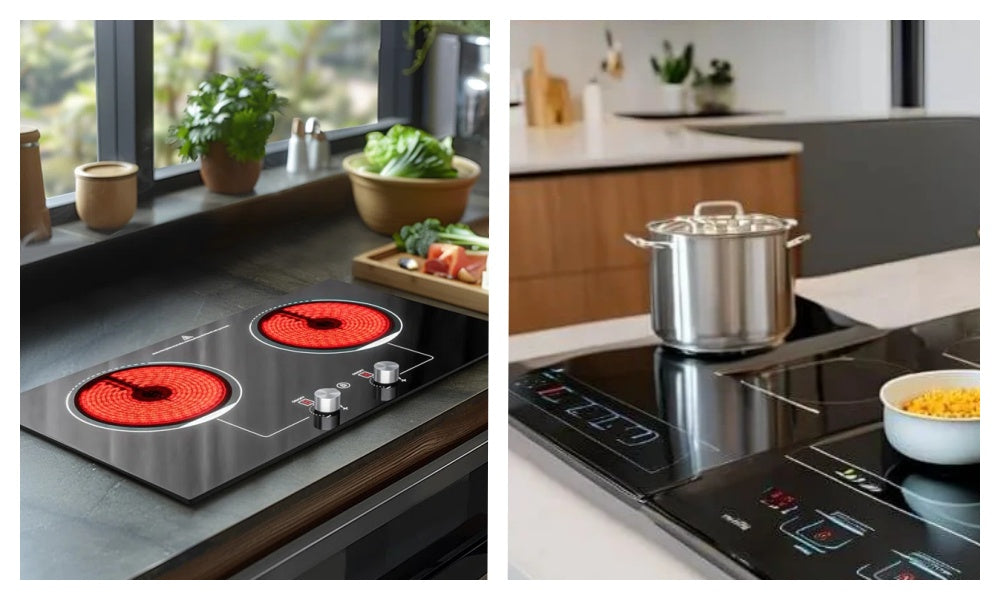
Halogen cooktops use a special bulb with a halogen gas inside. This bulb heats up when electricity passes through it. The heat then moves to the glass surface and to the pot or pan on top. The glass stays hot for some time after cooking. It uses radiant heat, like a small oven under the glass.
Halogen cooktops heat up quickly. The light you see is from the hot bulb glowing. They work with many types of cookware, even glass or ceramic pots. The heat spreads around the pan, not just under it.
Electromagnetic Induction Process
Induction cooktops use magnets and electricity to make heat. When you put a pot on the surface, the cooktop sends an electric current through the pot’s metal. This current creates heat right inside the pot. The cooktop itself stays cooler because it does not get hot directly.
This method heats very fast and uses less energy. Induction only works with pots made from certain metals, like cast iron or stainless steel. The heat is very focused on the pot, so less heat escapes into the air.
Credit: www.ciarraappliances.com
Cooking Performance Comparison
Comparing cooking performance helps you choose the right cooktop. Both halogen and induction cooktops offer unique benefits. Understanding their heat response and energy use is key. This guide breaks down these differences clearly.
Heat Response And Control
Induction cooktops heat pots very fast. They use magnetic fields to warm the pan directly. This method gives quick temperature changes. You can lower or raise heat instantly. It helps cook food evenly and prevents burning.
Halogen cooktops use radiant heat from halogen bulbs. They take a bit longer to heat pots. The heat spreads slower and cools down more slowly. Adjusting temperature is less precise than induction. Some food may cook unevenly.
Energy Efficiency Differences
Induction cooktops are very energy efficient. Most energy goes directly into the pan. Less heat escapes into the kitchen air. This saves electricity and keeps your kitchen cooler.
Halogen cooktops lose more heat to the air. The radiant heat warms both the pot and the surface. This makes them less efficient than induction. They use more energy for the same cooking.
Safety And Maintenance
Safety and maintenance are important when choosing a cooktop. Both halogen and induction cooktops offer unique benefits. Knowing how they differ helps you keep your kitchen safe and clean.
Safety Features Of Halogen Cooktops
Halogen cooktops heat up quickly using halogen bulbs. The surface becomes very hot during cooking. Most models include a hot surface indicator light. This warns you that the cooktop is still hot. Some also have automatic shut-off features. This stops the cooktop if it stays on too long without use. Always avoid touching the surface right after cooking. Use proper cookware to prevent accidents and damage.
Safety Advantages Of Induction Cooktops
Induction cooktops use magnetic fields to heat pots directly. The cooktop surface stays cool most of the time. This reduces burn risks and makes it safer for children. They also often include sensors to detect if no pot is on the surface. The cooktop will not heat unless a proper pot is placed. This feature prevents accidental burns and saves energy. The fast cooling surface lowers fire risks.
Cleaning And Upkeep Tips
Halogen cooktops can get stained from spills and food residue. Clean the surface regularly with a soft cloth and mild cleaner. Avoid abrasive scrubbers that can scratch the glass. For tough stains, use a cooktop scraper carefully. Induction cooktops are easier to clean. Since the surface stays cooler, spills do not burn onto it. Wipe spills quickly with a damp cloth. Regular cleaning helps maintain the cooktop’s look and performance.
Cookware Compatibility
Cookware compatibility plays a big role in how well your cooktop works. Different types of cooktops need different pots and pans. Using the right cookware helps cook food evenly and saves energy. It also keeps your cooktop safe from damage. Understanding which cookware suits halogen and induction cooktops is key to good cooking.
Suitable Cookware For Halogen
Halogen cooktops use radiant heat from a halogen bulb. This heat warms the cookware directly. Almost any flat-bottomed pot or pan works well. Stainless steel, aluminum, copper, and cast iron pans are all good choices. Glass and ceramic pans also work if they have a flat base. Avoid warped or rounded-bottom cookware. It may not heat evenly and can cause cooking problems.
Cookware Requirements For Induction
Induction cooktops use magnetic fields to heat cookware. Cookware must be magnetic to work. Cast iron and stainless steel pots are best. Aluminum, glass, and copper pans do not work unless they have a magnetic layer. You can test cookware with a magnet. If the magnet sticks, it will work on induction. The cookware bottom should be flat and smooth for good contact.
Cost And Availability
Choosing between a halogen cooktop and an induction cooktop often depends on cost and availability. These factors affect your buying decision and kitchen setup. Understanding the price differences and how easily you can find these cooktops helps you make a smart choice.
Price Comparison
Halogen cooktops usually cost less than induction cooktops. They use simple heating elements, which lowers production costs. Induction cooktops need special technology, making them pricier.
Basic halogen models start at a lower price point. Induction cooktops can be twice as expensive or more. The price gap narrows with high-end halogen and entry-level induction models.
Market Availability
Halogen cooktops are widely available in many stores. They fit well with traditional kitchen designs. Induction cooktops appear more in modern and upscale homes.
Many retailers stock halogen cooktops regularly. Induction models may require special orders or visits to specialty stores. Online shopping offers more options for both types.

Credit: www.ciarraappliances.com
Choosing Between Halogen And Induction
Choosing between a halogen cooktop and an induction cooktop depends on several factors. These include your daily cooking style and the overall look of your kitchen. Both types offer unique benefits and suit different needs. Understanding these can help you pick the best option for your home.
Lifestyle And Cooking Habits
Halogen cooktops heat up quickly and cook food evenly. They work with all kinds of pots and pans. Induction cooktops use magnetic fields to heat only the pan. This makes them very fast and energy-efficient. If you cook often and like precise temperature control, induction might suit you better. For casual cooking with simple pots, halogen is a good choice.
Kitchen Design Considerations
Halogen cooktops often have a classic look with glowing rings. They can fit well in traditional kitchen designs. Induction cooktops have a sleek, flat surface that blends with modern decor. Induction also stays cooler, which adds safety in small kitchens. Consider your kitchen’s style and space when choosing between these cooktops.
Frequently Asked Questions
What Is The Main Difference Between Halogen And Induction Cooktops?
Halogen cooktops use radiant heat from halogen bulbs to cook food. Induction cooktops use magnetic fields to directly heat cookware, making them more energy-efficient and faster.
Are Halogen Cooktops As Energy-efficient As Induction Cooktops?
No, halogen cooktops are less energy-efficient. Induction cooktops heat only the pot, reducing wasted heat and saving energy.
Can I Use Any Cookware On Halogen And Induction Cooktops?
Halogen cooktops work with most cookware. Induction requires magnetic-based pots like cast iron or stainless steel for proper heating.
Which Cooktop Heats Food Faster, Halogen Or Induction?
Induction cooktops heat food faster because they directly heat the pan. Halogen cooktops take longer as they heat indirectly.
Conclusion
Halogen cooktops and induction cooktops work differently. Halogen uses heat from a bulb, while induction uses magnets. Each has pros and cons for cooking speed and energy use. Choosing depends on your needs and budget. Both can cook well but in unique ways.
Understanding these differences helps you pick the right cooktop. Think about what suits your kitchen best. This way, you get good results every time you cook.

Hello, This is Annie Walker, a 38-year-old blogger, founder, and editor of Cookware Guider from NY, USA. I am a cookware fanatic and passionate cooker. I love to cook with different types of cooking appliances (example: all types of cookware, rice cookers, slow cookers, etc) almost every day in my kitchen. I love to share my experience with my readers in my blog. Also, I enjoy helping people to solve their problems through my website. You can follow me on Twitter & Pinterest. To know details about my blog please check the about us page.