
Whether you’re a home cook, a professional chef, or a DIY enthusiast, a sharp knife is essential. Dull knives are not just annoying—they’re dangerous. Many people cut themselves because they have to push harder on a blunt blade. The good news is, you don’t need to be an expert to keep your knives sharp. With the right tool and technique, anyone can get professional results at home. The DMT knife sharpener stands out for its simplicity, effectiveness, and durability. If you’re curious about how to use a DMT sharpener, what makes it different, and how to get the best results, this guide covers everything you need to know.
What Is A Dmt Knife Sharpener?
DMT stands for Diamond Machining Technology. DMT sharpeners use a steel plate coated with tiny diamonds. Diamonds are the hardest known material, so they can sharpen anything from kitchen knives to chisels and even ceramic blades.
There are several types of DMT sharpeners:
- Bench stones: Flat plates for sharpening large knives and tools.
- Pocket models: Small, portable, and great for outdoor use.
- Sharpening rods: For serrated knives and specific tasks.
- Guided sharpening systems: Hold your knife at a fixed angle for you.
The DMT system is popular because it’s fast, doesn’t need oil, and lasts a long time. The diamond surface stays flat, unlike traditional water stones that wear down unevenly.
Why Use A Dmt Sharpener?
Many sharpening products claim to work well, but DMT sharpeners have real advantages:
- Speed: Diamonds cut metal quickly, so you spend less time sharpening.
- Durability: They last for years without losing effectiveness.
- Versatility: Suitable for kitchen knives, pocket knives, scissors, and even some garden tools.
- No oil required: Just use water for lubrication (or even dry in some cases).
- Flatness: The diamond plate stays flat, ensuring consistent edge angles.
If you want to sharpen knives accurately and consistently, DMT sharpeners make it easier—even for beginners.
Types Of Dmt Knife Sharpeners
Choosing the right DMT sharpener depends on what you plan to sharpen and your experience level. Here’s a quick overview:
| Type | Best For | Size | Portability |
|---|---|---|---|
| Bench Stone | Kitchen knives, chisels, large blades | 6″–10″ | Low |
| Pocket Model | Pocket knives, camping, field use | 3″–4″ | High |
| Sharpening Rod | Serrated knives, scissors | Varies | Medium |
| Guided System | Beginners, precision work | Varies | Medium |
Grit Levels Explained
DMT stones come in different grit levels (like sandpaper). The grit determines how rough or smooth the sharpening surface is.
- Extra-Coarse (XX): Repairs damaged edges, removes chips.
- Coarse (C): Reshapes dull or very blunt knives.
- Fine (F): Regular sharpening, restores a sharp edge.
- Extra-Fine (EF): Polishing, finishing touch for razor-sharp edges.
Most people use coarse and fine grits for everyday sharpening. If you have very expensive or delicate knives, adding an extra-fine for polishing is helpful.
Preparing To Use A Dmt Knife Sharpener
Before you start sharpening, it’s important to get ready. Preparation makes the process safer and more effective.
- Clean the knife: Remove any food, oil, or dirt from the blade.
- Choose the right DMT sharpener: Match the grit and size to your knife.
- Set up your workspace: You need a flat, stable surface with good light. Place a damp towel under the sharpener to stop it from sliding.
- Gather water: DMT stones work best with a little water for lubrication. Avoid oil.
- Check your knife edge: Look for chips, bends, or extreme dullness. Deep damage may need a coarser stone.
Non-obvious tip: Mark the knife edge with a permanent marker before sharpening. This helps you see where metal is being removed and ensures you’re holding the correct angle.
How To Use A Dmt Bench Stone
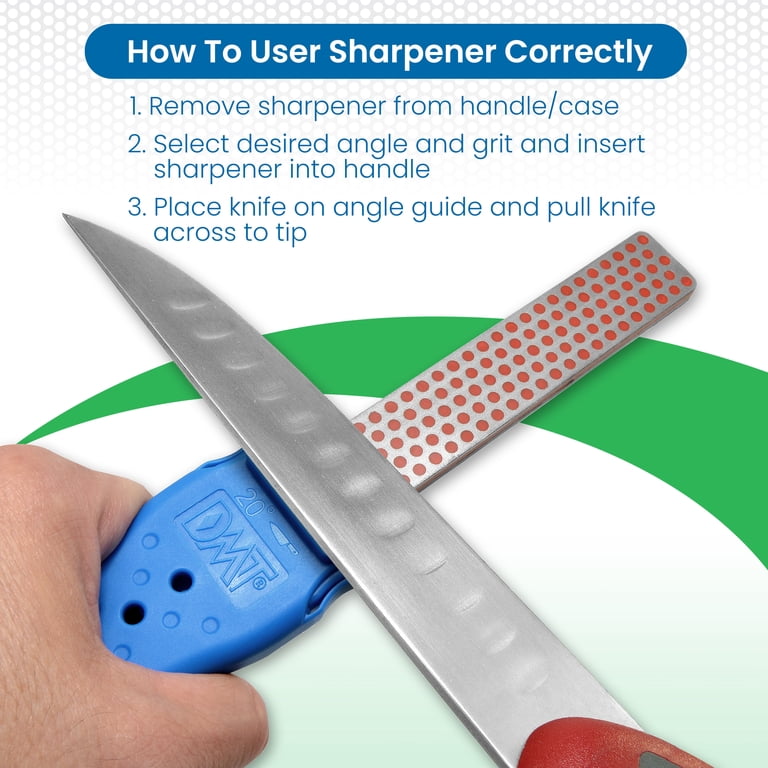
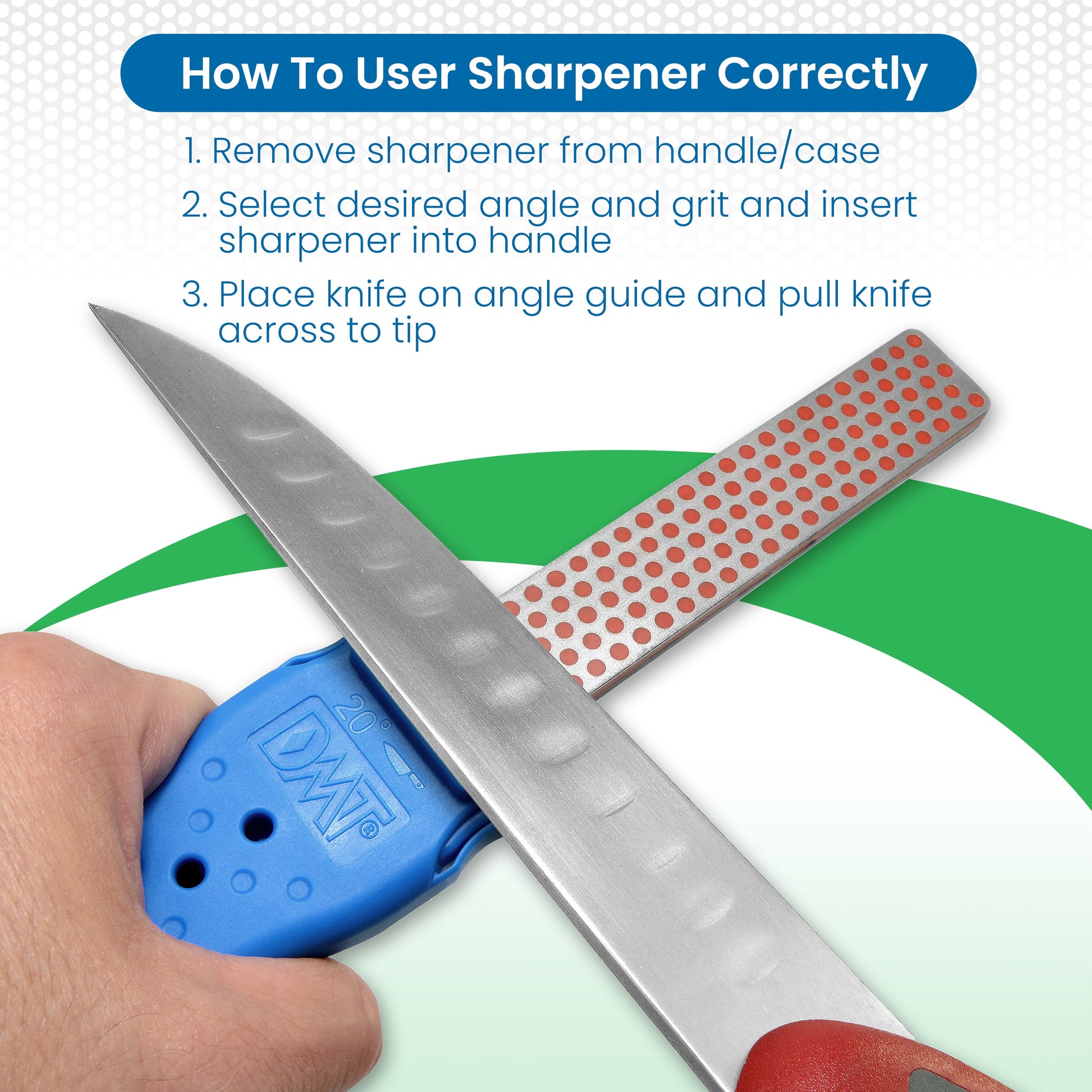
Bench stones are the most common and versatile DMT sharpeners. Here’s how to use one for a standard kitchen or chef’s knife.
Step 1: Wet The Stone
Splash a little water onto the diamond surface. This helps carry away metal particles and keeps the stone clean.
Step 2: Find The Correct Angle
Most kitchen knives are sharpened at a 15–20 degree angle. Holding this angle is critical for good results.
- Lay the knife flat on the stone.
- Lift the spine until it’s about the height of two stacked coins (for 20 degrees).
Insider tip: Use an angle guide clip if you’re unsure. DMT sells these, or you can buy generic versions.
Step 3: Position The Knife
Hold the handle with your dominant hand. Place your fingers on the flat of the blade, not the edge. This gives you better control.
Step 4: Sharpen One Side
- Starting at the heel (base) of the knife, draw the blade across the stone in a sweeping motion toward the tip.
- Keep the angle steady.
- Apply gentle, even pressure—do not press hard.
- Cover the entire edge from heel to tip.
Repeat this stroke 5–10 times, depending on dullness.
Step 5: Sharpen The Other Side
Flip the knife. Repeat the same motion, sharpening the other side an equal number of times.
Step 6: Check Your Progress
Wipe the blade and test sharpness. You can gently slice a piece of paper or shave a tiny bit of hair from your arm (carefully!). If not sharp enough, repeat steps 4 and 5.
Step 7: Finish And Clean Up
- Rinse the knife and the stone with water.
- Dry both with a towel.
- Store the stone in a dry place.
Non-obvious insight: Don’t rush. Sharpening too fast creates uneven edges. Go slowly, focusing on angle and pressure.
Using Dmt Sharpeners For Different Types Of Knives
Not all knives are the same. Here are specific tips for common knife types:
Chef’s Knives
Standard kitchen knives do best with fine or extra-fine stones. Use a 15–20 degree angle.
Serrated Knives
Use a DMT diamond rod. Insert the rod into each serration and move back and forth gently. Do not use a flat bench stone for serrations.
Pocket Knives
Pocket knives often have thicker blades. Use a coarse stone first if the knife is very dull, then finish with fine.
Japanese Knives
Many Japanese knives use a single bevel (sharpened only on one side). Follow the original factory angle, which is often 12–15 degrees.
Ceramic Knives
Use only diamond sharpeners like DMT. Traditional stones will not work.
Common Mistakes When Using A Dmt Sharpener
Even experienced users make errors. Here are the most frequent:
- Wrong angle: Too steep or too shallow makes a weak edge.
- Uneven pressure: Pressing harder in one spot creates a wavy edge.
- Skipping grits: Don’t jump from coarse to extra-fine. Move step by step.
- Not cleaning the stone: Metal particles clog the diamond surface.
- Rushing: Speed leads to mistakes. Consistency matters more than speed.
Pro tip: Practice on old or cheap knives first. This builds confidence before you sharpen expensive blades.
How To Maintain Your Dmt Sharpener
A DMT sharpener can last for years with simple care:
- Rinse after use: Wash with water, wipe dry.
- Deep clean occasionally: Use a soft brush and mild soap to remove metal dust.
- Avoid oil: Oil can clog the diamond surface.
- Store dry: Prevents rust on the steel plate.
- Don’t drop it: The steel plate can bend or warp if handled roughly.
If the sharpener feels “slick” or less effective, it’s usually just clogged. Clean it thoroughly and it should perform like new.

Credit: www.sharpeningsupplies.com
Dmt Vs. Other Knife Sharpeners
How does DMT stack up against other sharpening methods? Here’s a comparison:
| Sharpener Type | Speed | Ease of Use | Durability | Maintenance |
|---|---|---|---|---|
| DMT Diamond | Fast | Moderate | High | Low |
| Water Stone | Medium | Requires skill | Medium | High (needs flattening) |
| Ceramic Rod | Slow | Easy | High | Low |
| Pull-Through | Very Fast | Very Easy | Low | Low |
Key insight: DMT diamond stones offer the best mix of speed, durability, and versatility. Water stones can create very sharp edges but require more maintenance and skill. Pull-through sharpeners are easy but often damage knives over time.
Guided Systems Vs. Freehand Sharpening
DMT offers both guided sharpening systems and flat stones. Which is better for you?
| Method | Accuracy | Learning Curve | Speed | Flexibility |
|---|---|---|---|---|
| Guided System | Very High | Low | Medium | Low |
| Freehand (Bench Stone) | High (with practice) | Medium-High | High | High |
- Guided systems are great for beginners or those who want perfect angles every time.
- Freehand gives more control and works for almost any blade, but it requires practice.
Safety Tips For Knife Sharpening
Sharpening knives is safe if you follow a few rules:
- Work on a stable surface: Prevents slips and accidents.
- Keep fingers away from the edge: Always hold the spine or handle.
- Use light pressure: Hard pushing can cause the knife to jump.
- Wipe blades carefully: After sharpening, the edge is razor-sharp.
- Do not rush: Take your time, especially if you’re new.
Non-obvious safety insight: Always sharpen with the edge moving away from your body. This way, if you slip, the blade moves away from you—not toward your hand.
How Often Should You Sharpen Your Knives?
This depends on how often you use your knives and what you cut.
- Home cooks: Once every 1–2 months is usually enough.
- Professional chefs: Weekly or even daily touch-ups.
- Outdoor knives: Sharpen after every big job or when you notice dullness.
Frequent light sharpening is better than waiting until the knife is very dull. You’ll remove less metal and your knives will last longer.
Credit: www.walmart.com
Troubleshooting: Common Sharpening Problems
Sometimes, sharpening doesn’t go as planned. Here’s what to do:
- Edge not getting sharp: You may not be holding the right angle, or you need more strokes. Try marking the edge with a marker to check.
- Wire edge (burr) forms: A tiny, rolled-over bit of metal. Flip the knife and make a few gentle passes to remove it.
- Scratches on the blade: This is normal with coarse stones. Finish with a finer grit to polish.
- Uneven edge: Make sure you’re applying the same number of strokes per side.
Real-world Example: Sharpening A Chef’s Knife
Let’s walk through a real example. Suppose you have an 8-inch chef’s knife that’s become dull after months of use.
- Choose a fine DMT bench stone.
- Wet the stone with water.
- Mark the edge with a permanent marker.
- Hold the knife at a 20-degree angle.
- Draw the blade across the stone from heel to tip, 8 times on one side.
- Repeat on the other side.
- Check for sharpness by slicing a tomato or paper.
- Finish with extra-fine if you want a polished edge.
- Clean and dry everything.
This process takes about 5–10 minutes once you get the hang of it.
Credit: dmtsharp.com
Advanced Tips For Sharpening Enthusiasts
If you want to go beyond basic sharpening, consider these advanced methods:
- Stropping: After sharpening, use a leather strop to polish the edge even further.
- Double-bevel edges: Some cooks add a secondary edge for durability.
- Micro-beveling: Creating a tiny, extra-fine angle at the very tip for sharpness and strength.
Non-obvious insight: Try finishing with alternating single strokes on each side. This helps balance the edge and remove any leftover burr.
Environmental And Health Considerations
DMT sharpeners are a good choice for people concerned about the environment:
- No oil required: Just water.
- Long lifespan: Fewer replacements, less waste.
- No toxic dust: Unlike some ceramic or stone sharpeners.
Plus, sharper knives mean you can prepare food more safely and efficiently, reducing the risk of accidents in your kitchen.
Where To Buy Dmt Knife Sharpeners
DMT products are sold worldwide. You can find them in:
- Kitchenware stores
- Hardware shops
- Outdoor retailers
- Online (Amazon, official DMT website)
Always buy from a trusted seller to avoid counterfeits. For more details about the technology and product range, check out the official DMT website.
Frequently Asked Questions
How Long Does A Dmt Diamond Sharpener Last?
With normal use and good care, a DMT sharpener can last for many years—often 5–10 years or more. The diamond coating is very hard and does not wear out quickly. Just keep it clean and dry after use.
Can Dmt Sharpeners Be Used Dry?
Yes, DMT stones can be used dry, but using a little water helps remove metal dust and keeps the surface clean. Water is recommended for best results and longer life.
Is A Dmt Sharpener Suitable For All Types Of Knives?
DMT sharpeners work for almost all knives, including kitchen, pocket, hunting, and ceramic blades. For serrated knives, use a DMT rod, not a flat stone.
How Do I Know Which Grit To Use?
- Use coarse for very dull or damaged knives.
- Use fine for regular sharpening.
- Use extra-fine for a polished, razor-sharp finish.
If you’re unsure, start with fine—if it’s not removing enough metal, move to coarse.
What Should I Do If My Knife Won’t Get Sharp?
Check your sharpening angle and pressure. Mark the edge with a permanent marker to see if you’re sharpening the right area. Use more strokes if needed, and finish with a finer grit to polish.
Keeping your knives sharp isn’t just about convenience—it’s about safety, efficiency, and enjoyment in the kitchen or outdoors. With a DMT knife sharpener, you have a reliable tool that’s easy to use and delivers professional results for years. Whether you’re new to sharpening or want to refine your technique, following these steps will help you get the best from every blade you own.

Hello, This is Annie Walker, a 38-year-old blogger, founder, and editor of Cookware Guider from NY, USA. I am a cookware fanatic and passionate cooker. I love to cook with different types of cooking appliances (example: all types of cookware, rice cookers, slow cookers, etc) almost every day in my kitchen. I love to share my experience with my readers in my blog. Also, I enjoy helping people to solve their problems through my website. You can follow me on Twitter & Pinterest. To know details about my blog please check the about us page.